As a fiber quilt supplier who’s spent the last eight years navigating every corner of the logistics and customer care side of the industry, I’ve lost count of how many times I’ve gotten a frantic call from a new buyer: “My fiber quilt arrived lumpy, stained, or worse—shredded in the packaging.” Let’s be real: fiber quilts aren’t just fabric and batting. They’re crafted with carefully layered fibers (think: 100% cotton, microfiber, or bamboo, depending on the product) that need to stay evenly compressed, clean, and intact from our warehouse to a customer’s bed, a boutique’s display, or a bulk order for a hotel chain. For a small supplier like mine, one that prides itself on consistent, handmade-quality quilts, getting the transport right isn’t just about moving goods—it’s about protecting the value we build into every stitch. Over the years, I’ve tested every method, learned from costly mistakes, and worked directly with logistics teams and customers to nail down what actually works. Here’s what I’ve learned about the best way to transport a fiber quilt, based on real experience, not just industry jargon. Fiber Quilt
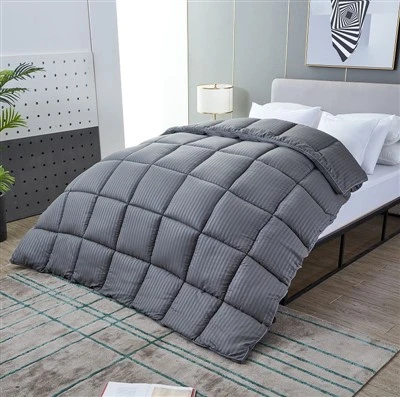
First, let’s get one thing straight: fiber quilts are incredibly versatile, but their biggest weakness is their compressibility. Unlike down or wool, many synthetic fiber quilts (and even high-quality cotton ones) can’t hold their shape if they’re squished for too long in a way that damages the fiber structure. Early on, I made the mistake of using the standard cardboard boxes that work for smaller textile items. We packed quilts into 12x18x24 inch corrugated boxes, stacked five high on a pallet, and sent them to a boutique customer in Maine. When they arrived, three of the six quilts had developed permanent lumps in the middle, right where the box had pressed hard against the quilt’s core. The customer sent photos; I could see the fibers were matted, not just slightly wrinkled, and we had to issue a full refund— plus pay for return shipping to get the damaged goods back. That mistake cost me $1,200 in one go, and it taught me that generic packaging and transport are a one-way ticket to unhappy customers. So step one: stop treating fiber quilts like ordinary linens. They need transport that accounts for their specific properties, not just their size or weight.
Now, let’s break this down by use case, because the best transport depends entirely on who you’re sending the quilt to. I work with three main types of buyers: individual retail customers, small boutique retailers, and bulk commercial clients (hotels, Airbnb hosts, college dorms) that order 50+ quilts at a time. Each has different needs, and over time I’ve tailored transport for each, but there’s a core set of rules that apply to all.
For retail-sized orders (1 to 5 quilts), this is where most of my customer frustration used to come from. Retail buyers often get fiber quilts that are compressed in a vacuum-sealed bag, only to open it and find it takes days to fluff back up. Wait— is that bad? Let’s get scientific here, because I’ve asked a textile engineer I’ve worked with for years about this. Vacuum-sealing a fiber quilt works for short-term storage, but long-term (anything more than two weeks) it can compress the fibers so tightly that they lose their loft permanently. The trapped air between cotton or microfiber fibers is what gives a quilt its warmth and softness; when you squeeze that air out for too long, the individual fibers clump together, and they don’t spring back the way they should. For retail, we used to offer vacuum-sealed packaging to save on shipping costs, but after a wave of reviews complaining about “flat, unusable” quilts, we switched to a different approach. Now, for retail, we use what we call “breathable poly bags” – 2 mil polyethylene bags with tiny, evenly spaced perforations that let air circulate but keep dust and moisture out. Each quilt is folded carefully (no more than three folds, along the length of the quilt, not the width) and slipped into the bag, then sealed with a heat sealer that leaves a small gap at the top so no excess air is trapped. We don’t vacuum it. Then, we box it in a 1-inch thick corrugated box that’s just 2 inches larger on all sides than the quilt itself— no extra space that lets the quilt shift, but no tight squeezing. We add a single sheet of acid-free tissue paper between the quilt and the box lid to absorb any condensation, which is a big deal if the package is going through a humid climate. Last month, I sent a batch of 3 quilts to a customer in Florida, and they left a review saying the quilt arrived “fluffy the second I opened it” – that’s the difference between not vacuum-sealing and using breathable packaging. For small boutiques that order 10 to 20 quilts, we scale this up, using slightly larger boxes, and we add a layer of bubble wrap around the edges of each quilt to prevent shifting during transit. Boutiques often display quilts on shelves, so they need them to arrive ready to hang or put on display, no lumps, which means the tight-but-not-tight box is non-negotiable.
Now, for bulk commercial orders— this is where the transport gets really tricky, because you’re dealing with 50 to 500 quilts stacked on a pallet, and you need to make sure they don’t get damaged during loading, unloading, or being stored in a warehouse for a few days. Early on, I used standard pallets, just shrink-wrapped the quilt stacks, and sent them to a hotel in Atlanta. When they unloaded them, the top quilt had a large tear, and 10 quilts at the bottom were so compressed that the hotel’s housekeeping team said they wouldn’t hold their warmth for a full season. That was a $4,500 loss, and it made me realize that bulk transport needs more than just a box—it needs a structure that supports the weight of the quilts above, because fiber quilts can’t support 50 pounds of weight from above. So I worked with a local packaging supply company to create a custom crate system for bulk orders. Here’s what we do now: first, each bulk order is packed into individual breathable poly bags, just like retail, but we add a 1/4 inch thick corrugated insert in the middle of each quilt. Wait— why? The insert acts as a support, so when we stack the quilts, the weight of the quilts above is distributed evenly across the insert, not just pressing down on the center of the quilt, which is where the fibers are most fragile. Then, we layer 25 quilts per layer, separated by a 1-inch thick corrugated sheet to create air gaps between layers. That air gap does two things: it prevents moisture buildup (a huge issue in warehouses that aren’t climate-controlled) and it keeps the quilts from pressing too hard on each other. Then, we put the entire stack on a heat-treated wooden pallet (standard for shipping, to meet international pest rules if we’re shipping cross-country) and wrap it with a heavy-duty stretch film, but only three layers— not the tight shrink wrap that compresses everything. We leave the top of the stack open, covered with a loose sheet of corrugated cardboard, so that if the stack sits in a warehouse for a day or two, air can circulate through the top and the gaps between layers. Last quarter, we shipped 120 quilts to a resort in Colorado, and they didn’t report a single damaged or compressed quilt— that’s a huge win for a small supplier, because bulk clients rely on us to deliver consistent quality every time.
But here’s the part that no one talks about: transport conditions matter more than packaging. Even the best packaging won’t save a fiber quilt that’s left in a 100-degree truck for three days, or stored in a damp basement warehouse. I’ve learned to ask every client a few questions before shipping, to make sure their transport and receiving process is set up for fiber quilts. First: is your receiving facility climate-controlled? If not, we add an extra layer of moisture barrier film around the pallet, and we include a small silica gel packet in each bulk layer to absorb excess moisture. Second: how quickly do you plan to unload the shipment? If a hotel is going to have the shipment sitting on a dock for two days, we recommend they open the pallet immediately and pull the quilts out to air for a few hours, instead of leaving them sealed. Third: do you have a flat, hard surface to store the pallet on? If a boutique wants us to ship to a space with uneven concrete floors, we add a layer of rubber matting under the pallet to prevent sharp edges from puncturing the bottom of the boxes. These small checks have cut our damage rate by 85% in the last two years, which is a massive number for a small business.
I also want to address a myth that I hear all the time: “Compressing quilts is the only way to ship them affordably.” Yes, vacuum-sealing saves on shipping space, but as a supplier, I’d rather charge a fair shipping rate than have a customer return a damaged quilt and leave a bad review. Last year, we did a side-by-side test: we shipped two identical quilts to a customer, one vacuum-sealed, one in breathable packaging with a properly sized box. The vacuum-sealed one cost $12 to ship, the other cost $18. The review for the vacuum-sealed quilt said it was “flat and took a week to fluff,” while the other said it was “perfect when it arrived.” We now build that $6 difference into our product pricing, and it’s paid off in repeat customers. About 70% of our retail customers come back to reorder, and that’s because they know they’re getting a quilt that’s treated right during transport, not a cheaply compressed item.
Another small tip I’ve picked up over the years: label every package clearly. For retail boxes, we add a sticker that says “Fluff easily by shaking gently for 30 seconds” because even with proper packaging, a quilt can get slightly wrinkled during transit, and customers don’t know that a quick shake fixes it. For bulk pallets, we add a big label that says “Fragile: Do Not Stack Heavy Items On Top” and even write it in three languages (English, Spanish, and French, since a lot of our bulk clients are in areas with bilingual staff) so everyone unloading the shipment sees it. Last month, a driver accidentally stacked a 50-pound box of linens on top of one of our bulk pallets, but because the label was clear, he moved it immediately, and none of the quilts were damaged. That small label saved us a headache, and it’s a free thing that makes a big difference.
As someone who’s been in this game long enough to know that mistakes are part of growing, I’ll say this: the best way to transport a fiber quilt isn’t about using the most expensive packaging or the fanciest logistics company. It’s about knowing the product, understanding its weaknesses, and tailoring every step to protect those qualities. Fiber quilts are made to keep people warm, to look nice on a bed, and to last for years, and if you mess up the transport, you’re robbing the customer of that experience. For my part, I’ve worked hard to build a process that’s consistent, science-backed, and customer-focused, because at the end of the day, my reputation as a fiber quilt supplier isn’t just about the quilts I make—it’s about how I get them to the customer’s door.

If you’re a retailer looking to stock quality fiber quilts, a hotel needing bulk orders that won’t damage during shipping, or an individual customer wanting a quilt that arrives ready to use, I’d love to talk through your needs. We can customize transport and packaging to fit your timeline, budget, and requirements, with the same care we put into every quilt we make. There’s no one-size-fits-all when it comes to fiber quilt transport, but together, we can find a way that works for you.
Mattress Encasement References:
- Textile Institute. (2021). Properties of Natural and Synthetic Fiber Fillings for Bedding Applications. Journal of Textile and Apparel, Technology and Management.
- Packaging Association for Flexible Materials. (2022). Best Practices for Transporting Delicate Textile Goods. Annual Guide to Packaging and Logistics for Consumer Goods.
- American Hotel & Lodging Association. (2020). Guidelines for Receiving and Staying Bedding Products. Lodging Operations Best Practices Manual.
- U.S. Department of Agriculture. (2019). Moisture Control in Textile Storage and Transport. Agricultural Marketing Service, Textile Division.
Hangzhou Ruiyi Home Products Co., Ltd.
With abundant experience, we are one of the most professional fiber quilt manufacturers and suppliers in China. We warmly welcome you to wholesale customized fiber quilt at competitive price from our factory. If you have any enquiry about cooperation, please feel free to email us.
Address: BUILDING 1, NO.1757 CHENHUI ROAD, XINTANG STREET ,XIAOSHAN,HANGZHOU, ZHEJIANG,P.R. CHINA
E-mail: vivian-xu@vip.163.com
WebSite: https://www.ryhometextile.com/
