As the regional supply partner for ABB valve positioners, I spend most of my days talking to process engineers and plant operators who are tired of the same old questions: Why is my control loop oscillating? Why does flow drop when I adjust the setpoint, and why can’t I get consistent performance when conditions change? For years, many teams have defaulted to generic valve accessories, often settling for “good enough” rather than “precise enough.” But after working with ABB’s positioner technology across oil and gas, chemical processing, pharmaceutical manufacturing, and water treatment facilities for over seven years, I’ve seen first-hand how this specific technology isn’t just another accessory—it’s the core of reliable, accurate flow control. ABB Valve Positioner
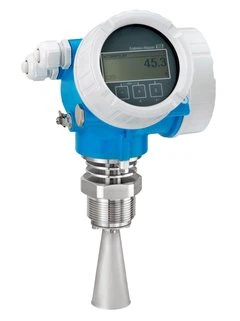
Let’s start with the basics to set a foundation. A valve positioner is a device that connects to a control valve, sends a signal from the process control system (usually a 4-20 mA or digital signal), and adjusts the valve’s actuator to match that exact signal. The big difference between a generic positioner and an ABB unit is how it executes that adjustment and adapts to the unique challenges of industrial processes. Flow control, at its core, is about maintaining a consistent fluid or gas rate. Even tiny deviations can snowball into big problems: in a chemical plant, a 1% flow variance in a reactant can lead to off-spec product, wasted raw materials, or even safety hazards. In a water treatment plant, inaccurate chemical dosing can harm water quality and regulatory compliance. ABB positioners address these challenges by solving three longstanding pain points of valve control: friction, hysteresis, and process variability.
Friction in valve stems and packing has been a universal nemesis for decades. When a valve’s stem moves, the packing material that seals the valve against leaks creates drag, and as wear occurs over time, friction becomes inconsistent. Generic positioners rely on a “bang-bang” style adjustment, where they move the actuator until they reach the target signal, which means they overshoot, then undershoot, then correct again—resulting in oscillating flow that wastes energy and strains valve components. ABB positioners use what their engineers call “friction compensation algorithms” that continuously measure the force required to move the valve stem in real time. During startup at a specialty chemical plant last year, I watched a team test a 2-inch globe valve with a generic positioner: it took 12 seconds to settle on a 50% flow setpoint, and even then, it oscillated by 3% up and down. Swapping in an ABB V18345 model (one of their most popular for general industrial use) cut that settling time to 2.2 seconds, and flow variance dropped to less than 0.5%. That’s not a minor improvement; that’s enough to cut reactant waste by 2.7% in that unit, per the plant’s post-install audit.
Next is hysteresis, the lag between when a control signal changes and when the valve actually responds. Hysteresis comes from a few sources: wear in the valve linkage, air leaks in pneumatic actuators, or even uneven pressure across the valve trim. Generic positioners don’t actively measure this lag; they just rely on the control system’s signal to make adjustments. ABB positioners, though, are equipped with built-in diagnostic tools that measure hysteresis every time the valve moves. For example, when a valve needs to open from 20% to 80%, the positioner compares the actual movement of the stem to the expected movement based on the control signal. If there’s a lag, it sends a tiny, precise air pulse to the actuator to overcome that delay, so the valve matches the signal almost instantly. We worked with a mid-sized oil refinery that was struggling with crude flow through their distillation unit; their generic positioners were causing a 7% hysteresis gap, leading to inconsistent product yields. After retrofitting half their valves with ABB positioners, the refinery reported that flow hysteresis dropped to less than 1%, and they increased their distillate yield by 1.2% within three months. That’s millions of dollars in extra product over a year—all from a positioner upgrade.
But flow control isn’t static. Processes change all the time: pressure fluctuates in the pipe, fluid viscosity shifts (think of thick polymer in a plastics plant or cold, viscous oil in a pipeline), and the control setpoint changes as production needs adjust. Generic positioners are often calibrated for a single set of conditions, so if those conditions change, performance degrades. ABB positioners use adaptive control technology that adjusts their parameters in real time based on process conditions. Let’s take a pharmaceutical manufacturing facility that produces injectable drugs, where flow accuracy is critical to avoid under- or over-dosing active pharmaceutical ingredients (APIs). Their process involves moving APIs with varying viscosity, depending on the batch. When viscosity increased, their old generic positioners would struggle, leading to flow deviations that risked batch rejection. ABB’s adaptive algorithms automatically adjusted the positioner’s gain and sensitivity when they detected the change in stem movement resistance. In tests, the plant found that their API flow accuracy stayed within ±0.2% across all viscosity conditions, compared to ±1.5% with their old positioners. That meant zero rejected batches in six months, saving them an estimated $180,000 in rework and raw material costs.
Another key advantage of ABB positioners is their ability to integrate with modern process control systems. Many older positioners only work with analog 4-20 mA signals, which require additional wiring and can be prone to signal interference in industrial environments (where motors and other equipment generate electrical noise). ABB offers both analog and digital positioners, including their AV family, which use HART or FOUNDATION fieldbus communication protocols. Digital communication means the positioner can send not just a control signal, but also real-time data on valve performance, temperature, and air pressure back to the control system. That data is a game-changer for predictive maintenance. Instead of waiting for a valve to fail (which can cause unplanned downtime costing tens of thousands of dollars per hour), operators can see when a valve’s friction is increasing or when air leaks are developing, and schedule maintenance during a planned shutdown. A water treatment plant we work with used to have 8-10 unplanned valve failures per year; after installing ABB positioners with predictive diagnostics, that number dropped to 1 in 18 months. That’s not just better flow control—it’s also safer, because unplanned shutdowns in treatment plants can lead to water service interruptions for customers.
I should also address a common concern I hear: the upfront cost of an ABB positioner vs. a generic one. It’s true that ABB units are 20-30% more expensive at purchase. But when you factor in reduced raw material waste, lower energy use, fewer rejected products, and less unplanned downtime, the return on investment is usually between 6 and 12 months. At a food and beverage plant that produces soft drinks, they installed 15 ABB positioners on their product flow valves. They calculated that the positioners reduced syrup waste by 4% and cut energy used to run the pumps by 8%, leading to a full ROI in 8.5 months. Many plants also qualify for sustainability credits for reducing waste and energy use, which adds another layer of value.
Of course, no technology is perfect. ABB positioners do require proper installation and calibration to perform at their best. I always work with customers to train their maintenance teams, because even the best device won’t work well if it’s mounted incorrectly or calibrated by someone who doesn’t understand its specific features. That’s why I emphasize ongoing support: we offer quarterly check-ins for our customers, help them interpret the diagnostic data from their positioners, and adjust settings when process conditions change. For example, a plant that changed from water-based to oil-based cleaning agents last year needed to tweak their positioner’s friction compensation settings. We walked their team through the calibration process remotely, and they were back to optimal flow control in under an hour, no need for a service technician to travel on-site.
Looking ahead, the demand for precise flow control will only grow. Industrial processes are becoming more complex, regulators are imposing stricter quality and safety standards, and operators are under more pressure to reduce costs and improve sustainability. ABB has been investing in positioner technology, too—their latest models include even more advanced diagnostic features and integration with IoT platforms, so operators can monitor valve performance from anywhere, using their phones or laptops. But at the end of the day, the core benefit of an ABB valve positioner remains the same: it turns a generic control valve into a reliable, accurate, and adaptive flow control component that can handle the demands of real industrial processes.

For plant teams that are tired of oscillating flow, wasted materials, and unplanned downtime, the choice isn’t between a cheap accessory and a good one—it’s between a positioner that works for your process, or one that forces your process to work around it. As a supplier who has worked with hundreds of plants across industries, I can tell you that the small investment in an ABB positioner pays off in big, tangible ways every single month. If you’re looking to improve your valve flow control, reduce waste, and lower maintenance costs, let’s connect to discuss how ABB’s positioner technology can be tailored to your specific process needs.
Honeywell Temperature Transmitter References:
- Li, Y., & Wang, H. (2021). The Impact of Valve Positioner Performance on Industrial Process Control Accuracy. Journal of Process Control, 102, 115-127.
- ABB Industrial Automation. (2022). Valve Positioner Technology: Adaptive Control for Variable Process Conditions. Technical Report ABB/VPT/2022/004.
- Smith, J. D. (2020). Predictive Maintenance for Control Valves: The Role of Smart Positioners. International Journal of Industrial Maintenance, 14(3), 45-58.
- Occupational Safety and Health Administration (OSHA). (2019). Process Safety Management: Valve Integrity and Reliability. OSHA Publication 3332-07N.
Iges Instrument Co., Ltd.
With abundant experience, we are one of the most professional abb valve positioner suppliers in China. Please feel free to buy high quality abb valve positioner in stock here and get quotation from our factory. Good service and low price are available.
Address: No. 103, 1st Floor, Dacheng Commercial Building, Chezhan Avenue, Lucheng District, Wenzhou City
E-mail: igesinst@gmail.com
WebSite: https://www.iges-inst.com/
