Hey everyone, if you’re in the market for a commercial grain mill, let me cut through the jargon real quick—this is stuff I’ve talked through with bakers, feed producers, and small to mid-sized processing shops a hundred times. Not all mills are built the same, and skimping on the wrong part could cost you thousands in wasted grain, down time, or bad product that sends customers packing. Over the years, I’ve worked on more mill repairs and custom builds than I can count, so here’s the real deal on what makes a high-quality commercial mill stand out. Commercial Grain Mill
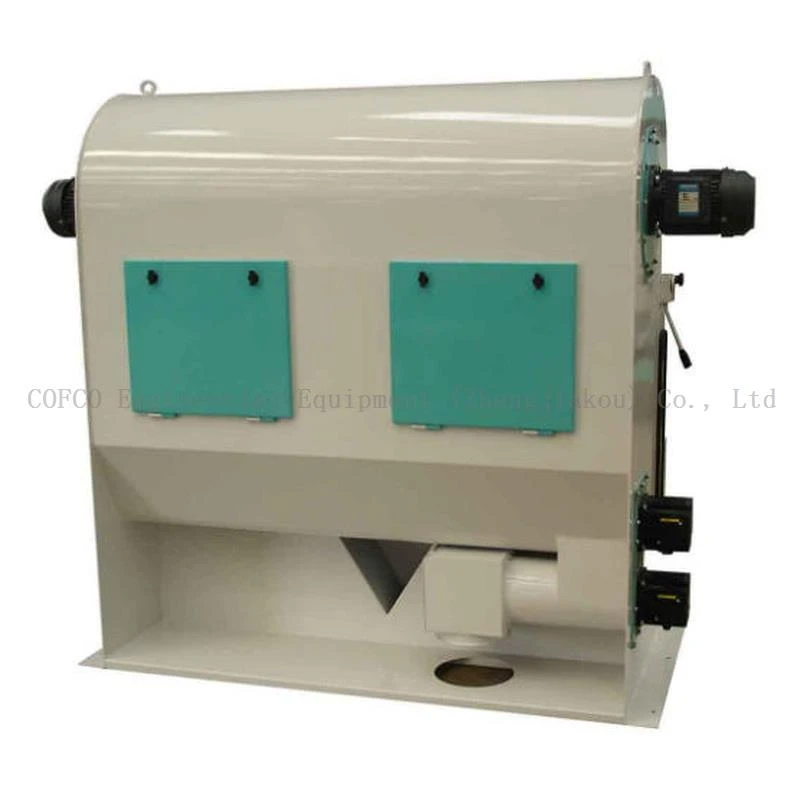
First up, and this is non-negotiable: build quality that can handle heavy, consistent use. I don’t mean the flimsy home-use stuff you can find at big-box stores that bends if you breathe too hard on it. Commercial mills run 8, 12, even 16 hours a day sometimes, grinding wheat, corn, oats, or whatever your product is nonstop. The good ones have a frame made from heavy-gauge steel—think 10 or 12-gauge, not that thin 18-gauge stuff that warps after a week. I once had a customer come to us last year who’d bought a “commercial” mill from a no-name brand online; he ran it 8 hours straight, and the side of the frame bent so bad the roller alignment was off, producing half fine dust and half big chunks. We had to replace the entire frame and recalibrate the rollers, and he lost three days of production. Lesson there: if the mill’s frame isn’t thick enough to stay rigid under load, it’s not worth it. Also, check the motor—don’t go for a hobby motor. A 5hp motor is way underpowered for most commercial setups; look for 7.5hp or 10hp, depending on your throughput needs, and make sure it’s a TEFC (Totally Enclosed Fan Cooled) motor. That means it’s sealed against dust and grain debris, which will fry a regular motor fast. Dust is everywhere around grain processing, so sealing that motor up is a big one for longevity.
Next, roller quality and design—this is the heart of the mill, full stop. If your rollers are garbage, your grind is garbage. High-quality rollers are made from forged steel, not cast iron. Cast iron is cheaper but it’s brittle, so it cracks or chips if you get a rock in the grain (and trust me, you will—even cleaned grain has tiny foreign bits). Forged rollers are tough, they hold their shape longer, and you can regrind them a few times before they need replacing, which saves you money long-term. Also, the texture of the roller matters a lot. They should have a uniform, precise tooth pattern—usually a specific number of teeth per inch (TPI) depending on what you’re grinding. For example, coarse cornmeal needs fewer teeth, fine flour needs more. The key is that the pattern is consistent across the entire roller, no uneven spots or skipped teeth. If the teeth are off, you get inconsistent grind: some kernels are ground perfectly, some are left whole, some are over-ground into dust. I’ve seen cheap mills where the rollers were just machined with a random file, and you could run your finger along them and feel the rough, uneven teeth. That’s not going to cut it for anyone needing a uniform product. Also, the gap between the two rollers needs to be adjustable easily and precisely. You don’t want to have to use a wrench and guess at the gap every time you switch grain types. Good mills have a calibrated adjustment knob or digital readout that lets you set the gap to within a thousandth of an inch, so you can switch from wheat flour to oat groats in five minutes instead of an hour of tweaking.
Throughput is a big one too, but not just maximum throughput—consistent throughput. A lot of brands will brag that their mill can do 2,000 pounds an hour, but that’s only if you run perfect, dry, uniform grain. In real life, grain has varying moisture content, sometimes there are whole heads of wheat, maybe a little chaff, and the mill still needs to keep up. High-quality mills don’t drop their output when grain isn’t perfect. They also have a good feed system—an auger or a gravity feed that feeds grain evenly between the rollers, not too much and not too little. If the feed is inconsistent, the mill can get overloaded, jam, or grind unevenly. I saw one mill a while back that had a flimsy gravity feed; if you poured more than 10 pounds at a time, it would spill grain around the rollers and jam them, stopping production mid-batch. The best feed systems are controlled with a variable speed drive, so you can adjust how much grain is being fed based on the grind you need. That’s a small feature but it makes a huge difference in how smoothly the mill runs day to day.
Cleanability is something that people don’t think about until they’re elbow-deep in moldy grain or cross-contaminated batches. If you’re grinding multiple types of grain—say wheat for flour and corn for animal feed—you can’t have residue from one batch mixing into the next, especially if you’re making food-grade product. High-quality commercial mills have parts that are easy to take apart, no weird hidden bolts or tiny crevices where grain can get stuck. The interior should be smooth, no rough spots, so you can wipe it down with a cloth or a pressure washer (as long as it’s rated for that) without leaving leftover grain. Also, look for mills that use food-safe materials for all parts that touch the grain—no cheap plastic that can leach chemicals or absorb moisture. Stainless steel is your friend here, especially for the hopper, the roller housing, and the final grind chute. Some cheaper mills use galvanized steel, which can react with certain grains and leave a metallic taste in your product. That’s a dead giveaway of a low-quality mill, especially if you’re selling to bakers or consumers who care about flavor.
Durability and maintenance access—let’s be real, every mill will need repairs eventually. The best ones make that easy, not a hassle. You want a mill where the rollers are accessible without having to remove half the frame, where bearings are replaceable and you can buy them at any local hardware store, not some obscure part that you have to order online and wait a week for. Also, the bearings themselves are important: use sealed, self-lubricating bearings, not plain bearings that need to be greased every few hours. Greasing a commercial mill every hour is a waste of time, and you’ll skip it eventually, leading to bearing failure. Sealed bearings mean you only need to check them every few months, which cuts down on downtime a lot. I’ve seen some top-tier mills that even have a spare roller included, so you can swap it out in 10 minutes instead of waiting for a replacement roller to come in from the manufacturer. That’s a game-changer for businesses that can’t afford to stop production for days while waiting for parts.
Safety features are non-negotiable for commercial setups. You’re working with heavy machinery, grain dust is flammable, and people are around it every day. High-quality mills have things like emergency stop buttons that are easy to reach, not tucked behind the frame. They also have guards over the moving parts—rollers, pulleys, belts—so you can’t accidentally reach in while the mill is running. Some even have dust extraction ports built right in, which connects to your existing dust collection system to cut down on the amount of dust in the air. Grain dust is explosive if it builds up, so that’s not just a convenience—it’s a safety must. I once heard about a small bakery that had a dust explosion because their mill didn’t have proper extraction, and they had to replace the entire production area. Don’t cut corners on safety here.
Warranty and support—this is the part that separates a reputable supplier from a fly-by-night seller. If a mill is really high-quality, the manufacturer will stand behind it with a good warranty—at least 2 years on parts, maybe longer on the frame and motor. And not just a warranty that covers broken parts, but actual support: if you have a problem, someone will answer the phone, not make you wait for an email reply for 3 days. A good supplier will also offer on-site service if needed, or local repair techs, so you don’t have to ship a 500-pound mill back for repairs. I’ve had customers buy mills from overseas that had no support; when a motor went bad, they had to ship the whole mill halfway across the world, which cost more than the motor itself. That’s not a good deal, no matter how cheap the mill was.
Wait, also, don’t sleep on consistency of grind. Like I said earlier, it’s not just about coarse vs fine—its about every particle being the same size. A good mill will give you uniform grind batch after batch, no matter how long it runs. That’s critical if you’re making bread: inconsistent flour can lead to bad rise, uneven texture, unhappy customers. I had a customer who used to buy cheap mills for his artisanal bakery; every other batch, the flour would be too fine at the top of the bin and too coarse at the bottom, so he’d have to sift it all and waste 10% of every batch. Switching to a quality mill cut that waste to less than 1%, which saved him thousands a year.
Another thing: noise level. Commercial mills can get loud, like 85 decibels or more, which is loud enough to cause hearing damage if you’re around it all day. High-quality mills are designed with noise-dampening materials, so they run a lot quieter—around 70-75 decibels, which is way easier on your team’s ears and means you don’t need hearing protection if you’re just nearby. That’s not a huge thing at first, but your employees will thank you, and you won’t have to invest in hearing protection for your whole staff, which is another cost down the line.
At the end of the day, a high-quality commercial grain mill isn’t something you buy once and forget about for a year. It’s an investment that will run your business for 10, 15, even 20 years if you pick the right one. If you skimp on build quality, roller material, safety, or support, you’ll end up paying for it in wasted grain, downtime, repairs, and unhappy customers. I’ve seen too many businesses go under because they tried to save a few bucks on a cheap mill, and it blew up in their face.

If you’re shopping around, don’t just look at the price tag. Ask the supplier about the frame material, roller composition, warranty, and what kind of support they offer. Test if you can take the parts apart easily, ask for a sample of the grind from the mill, check if the motor is TEFC. Any reputable supplier will be happy to walk you through all of this, no pressure. If you have questions about matching a mill to your specific needs—whether you’re a small feed producer, a bakery, or a mid-sized grain processing shop—hit us up to chat. We work with all kinds of businesses to find the right mill that fits their throughput, product type, and budget, no guesswork, no hidden fees.
Flour Mill Service Equipment References:
- Grain Processing Equipment Association. (2022). Performance Standards for Commercial Grain Milling Systems. GPEA Publications.
- National Food Safety Foundation. (2021). Sanitation Guidelines for Food Processing Equipment. NFSF Technical Report.
- Occupational Safety and Health Administration. (2020). Grain Dust Hazards and Control Measures. OSHA 3551-05R.
- American Bakers Association. (2023). Equipment Specifications for Artisanal Flour Milling. ABA Industry Brief.
COFCO Engineering Equipment (Zhangjiakou) Co., Ltd.
As one of the most professional commercial grain mill manufacturers and suppliers in China, we also support customized service. Please feel free to wholesale advanced commercial grain mill for sale here from our factory. Quality products and reasonable price are available.
Address: No.4 ZhongLiang Street, high-tech industrial development zone, Zhangjiakou, Hebei, PRC
E-mail: mayihui@cofco.com
WebSite: https://www.ceeflourmill.com/
