Hey folks, if you’ve ever stared at a ship’s deck and wondered how all those tiny wires and cables hold up in the brutal blue hell of the ocean, you’re not alone. As the go-to flat cables supplier for marine projects across the globe, I get this question at least three times a week: “What makes a flat cable work out there, not just in a warehouse or a dock office?” Let’s break this down like we’re chatting over a coffee by the docks, no stuffy engineering jargon that makes your eyes glaze over. Flat Cables
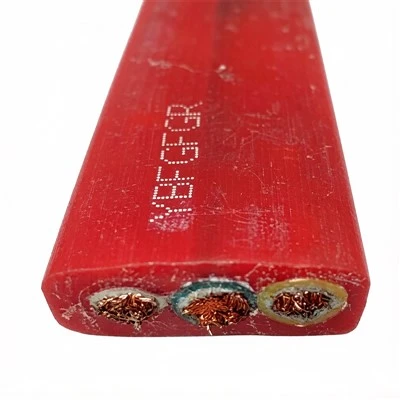
First off, let’s get real: marine environments are not like your average office or even a construction site 10 miles inland. We’re talking constant salt spray, full immersion in saltwater, wild temperature swings that go from sweltering tropical heat to freezing Arctic ice, UV rays that burn through regular plastic like it’s paper, and even that weird electrical interference from everything on a ship’s engine room. Regular flat cables for, say, a home theater setup? They’d turn to useless goop in less than a year out at sea. So what exactly do we look for when we engineer our marine-grade flat cables? Let’s start with the big one everyone forgets: salt resistance.
Saltwater is corrosive, full stop. It’s not just a little rust on a bike chain—when salt dissolves in water, it creates ions that act like tiny little acid bombs, eating through metals and plastics faster than anything. Our flat cable conductors, the copper wires inside? We don’t use bare copper here. We tin-plate every single one of them. Tin acts as a barrier, so the saltwater can’t reach the copper and start that galvanic corrosion process. Wait, what’s galvanic corrosion? Think of it like two different metals touching in water—one corrodes faster to “feed” the other. That’s a huge risk on ships, where you’ve got steel hulls, aluminum parts, and copper wires all living together. Tinning the copper conductors eliminates that problem almost entirely. And then there’s the outer jacket, the stuff that wraps around the whole cable. It can’t be regular PVC. No way. We use cross-linked polyethylene (XLPE) or thermoplastic elastomer (TPE) specifically formulated for marine use. These materials don’t break down when splashed with saltwater, don’t swell up when fully submerged, and don’t get brittle after being in that salty air for years. I’ve seen regular PVC flat cables from another supplier get pulled off a fishing boat after 18 months, and the jacket was cracked so bad you could see the copper. Our marine flat cables? We test them by spraying them with saltwater nonstop for 1,000 hours—way more than they’ll ever see in real life—and they come out totally fine. That’s non-negotiable.
Next up, temperature extremes. Marine environments are all over the map. A cargo ship steaming from the Gulf of Mexico to the North Sea will go from 90°F (32°C) in the engine room to 30°F (-1°C) in the forward hold, all in a few days. If your cable jacket can’t handle that, it either gets so soft in the heat that it stretches and pulls loose, or so brittle in the cold that it cracks when someone walks over it or the ship shifts in a storm. Our marine flat cables are rated for a temperature range of -40°F (-40°C) all the way up to 194°F (90°C). That covers everything from being stored in an unheated dock warehouse in winter to sitting right next to a ship’s cooling pump. We also add what’s called “thermal stabilizers” to the jacket material—little additives that stop the plastic from breaking down when it’s exposed to high heat for long periods. No one wants a cable that starts melting in the middle of a storm because it’s too close to the engine.
Then there’s UV and weather resistance. Ships spend months at sea, no break, no roof over the deck equipment where our flat cables are often run. The sun’s UV radiation is brutal—it breaks down polymer chains in plastics, making them fade, crack, and lose their flexibility over time. Regular flat cables for outdoor use on land? They can handle a few months of sun, but put them on a fishing boat that’s out for 6 months straight in the Caribbean sun, and they’ll be trash by the end of the trip. Our marine flat cable jackets are UV-stabilized, which means we’ve added special compounds that absorb or reflect UV rays so they don’t damage the plastic. We test this too—we put cables in UV chambers that simulate years of sun exposure in just a few weeks, and our jackets hold up perfectly. No cracking, no fading, no going stiff. That’s a must for any cable that’s going to be run above the waterline, on deck, or on any external equipment like radar mounts or navigation lights.
Water immersion resistance is another big one. Sometimes cables get fully submerged, either because a hatch left open got hit by a big wave, or they’re run through a compartment that floods occasionally (we’ve all seen that happen on old vessels). Regular flat cables aren’t designed to be under water—their jacket might get soggy, or water can seep into the gaps between the conductors and cause electrical shorts. Our marine flat cables are pressure-tested to withstand being fully submerged in saltwater for up to 72 hours at depths of 10 meters (that’s over 30 feet) without any water getting inside. How? The way we design the flat shape actually helps here—we seal the edges so water can’t creep in along the length, and the jacket is continuous, no gaps or weak points. We also add what’s called “water-blocking tape” around the conductors inside, just in case—if there’s ever a tiny flaw in the jacket, that tape swells up when it gets wet and seals the gap before water can reach the copper. That extra layer is something most general-purpose flat cables don’t have, and it’s a game-changer for marine use.
Electrical performance is non-negotiable too. On a ship, cables run everything from navigation systems and radar to life support equipment and engine controls. If a cable shorts out, that’s not just a nuisance—it’s a safety hazard. Marine environments have way more electrical noise than, say, a small office—you’ve got generators, motors, radar systems, all sending out electrical signals that can interfere with weaker cables. Our flat cables are designed with shielding if needed—aluminum foil or braided copper shielding that blocks out that interference, so your navigation system doesn’t glitch during a storm, and your engine controls work when you need them to. We also test every batch of cables for continuity and insulation resistance to make sure there are no hidden flaws that would cause a short. And we comply with all the major marine standards—IMO, ABS, DNV, ISO—so you know they meet the strictest rules for the industry. No cutting corners here.
Wait, let’s not forget mechanical durability. Ships move a lot—they roll, pitch, vibrate nonstop, especially in rough seas. Cables get stepped on, tugged when equipment is moved, bent around tight corners on the deck. Regular flat cables are stiff and hard to bend, which makes them prone to cracking when they’re flexed a lot. Our marine flat cables are made with flexible TPE or XLPE jackets that can be bent to a small radius over and over again without cracking or breaking. We test flex resistance by bending the cables thousands of times back and forth, simulating years of use on a ship, and they come out just as good as new. We also reinforce the conductors a little so they don’t break when they’re tugged—even if someone accidentally pulls on a cable that’s run along the deck, it won’t snap.
Oh, and fire resistance—can’t leave that out. Marine fires are a huge risk, and if a cable catches fire, it can spread fast through a ship’s compartments. Our marine flat cables are flame-retardant, meaning they won’t keep burning if you take the flame away. They also don’t give off toxic fumes when they’re exposed to high heat or fire, which is super important for crew safety—no one wants to breathe in poisonous smoke if there’s a fire. We test this too, per marine fire standards, so you can be sure our cables won’t make a bad situation worse.
I’ve been in the flat cable supply game for 12 years now, and I’ve seen what happens when corners are cut on marine cables. A fishing boat captain came to me a few years ago, upset because he replaced his navigation flat cables every 6 months—they were going bad from salt and sun. He’d been buying cheap cables from a supplier that cut corners on the jacket and conductor tinning. We sent him a sample of our marine flat cables, and he installed them 4 years ago. Last month, he hit me up to order more, and told me those same cables are still going strong, no issues. That’s the kind of track record we stand behind.
So if you’re outfitting a new ship, repairing an old vessel, or replacing marine cables on a work boat, you don’t have to settle for cables that will fall apart in a year. You need flat cables that are built for the ocean’s toughest conditions: salt-resistant tin-plated conductors, UV-stabilized and water-resistant jackets, temperature-rated for extreme swings, mechanically durable for constant movement and vibration, flame-retardant, and compliant with all marine safety standards.
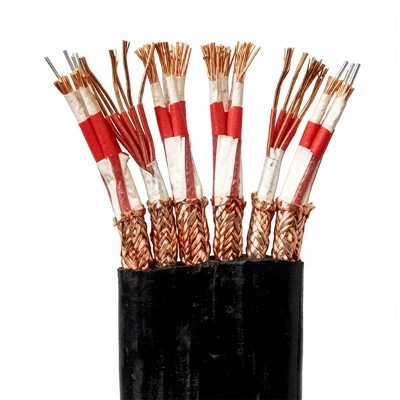
If you’re tired of cables that don’t hold up out at sea, hit us up to chat about your project. We can send free samples, work with your specific setup, and make sure you get the right marine flat cables for your needs. No generic stuff here—we tailor our cables to handle whatever the ocean throws at you.
Compensating Cables References:
International Maritime Organization (IMO) Resolution A.813(19) – Performance Criteria for Electrical Cables for Marine Use
American Bureau of Shipping (ABS) Rules for Building and Classing Steel Vessels
International Organization for Standardization (ISO) 10303-242 – Industrial Automation Systems and Integration – Product Data Representation and Exchange – Part 242: Application Protocol for Product Life Cycle Support – Cables and Wires
Marine Corrosion Journal, Vol. 52, No. 3, 2017 – Galvanic Corrosion Mitigation in Marine Electrical Systems
Underwriters Laboratories (UL) 1581 – Standard for Electrical Wires, Cables, and Flexible Cords
Anhui Yuantong Cable Co., Ltd.
As one of the most professional flat cables manufacturers and suppliers in China, we offer a wide range of cables with superior quality. Please feel free to wholesale bulk customized flat cables from our factory. Also, pricelist is available.
Address: Yongfeng Industrial Park, Tianchang City, Anhui Province
E-mail: ahytcable@126.com
WebSite: https://www.yuantongcable.net/
