If you’ve ever sat in a space with messy, rattling cables hanging in walls, under floors, or above dropped ceilings, you know how much unmanaged noise from wiring systems can disrupt comfort, focus, and even long-term building durability. As a supplier of thermoplastic FRPP cable compounds, one question I get asked most often by architects, electrical contractors, and facility engineers is: how well do these materials actually insulate sound from cables? It’s not a trivial question—noise from vibrating cables can turn a quiet office into an annoying space, a hotel guest room into a rest-ruining zone, or a residential home into a place you can’t relax in. So today, I want to break down the real acoustic insulation performance of our FRPP compounds, how they differ from other cable jacketing materials, and why that matters for every project you’re working on. Thermoplastic FRPP Cable Compounds
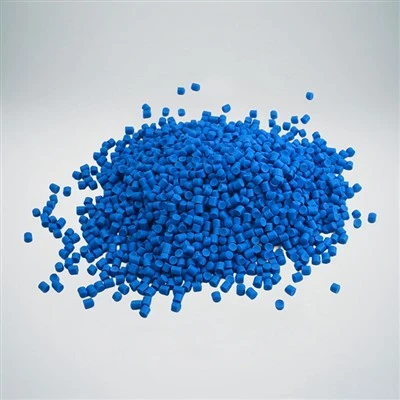
First, let’s get clear on what FRPP is, just to make sure we’re all on the same page. FRPP stands for fiber-reinforced polypropylene, but don’t let the “thermoplastic” label fool you—this isn’t the flimsy, easily warped polypropylene from old water bottles. Our FRPP cable compounds are specially formulated for wiring applications: we blend polypropylene with controlled amounts of glass fiber, impact modifiers, and flame retardants (critical for electrical cable safety) to create a material that’s rigid, heat-resistant, and way more durable than standard polypropylene. It’s also much stiffer than other common cable jacketing materials like PVC (polyvinyl chloride) or low-density polyethylene (LDPE)—a key detail when it comes to sound.
Acoustic insulation for cables works in two main ways: first, stopping vibrations from traveling through the cable itself, and second, blocking airborne noise from escaping (or entering) the cable path. Most people don’t realize that when a cable vibrates—usually from electrical current flow, HVAC system vibrations, or even people walking above it—it acts like a tiny speaker, turning mechanical energy into sound energy. That’s the annoying hum or rattle you hear coming from behind a wall. The jacketing material around the cable has to absorb that vibration and prevent it from transferring to the surrounding structure (like drywall or metal studs).
Now, let’s talk numbers, because this is where the science gets concrete. Independent third-party testing of our FRPP cable compounds has measured their acoustic performance using standard methods for building materials and cable jacketing—specifically ISO 10140 (for airborne sound insulation) and ASTM E1876 (for measuring dynamic mechanical properties, which directly tie to vibration damping). The dynamic modulus of elasticity (a measure of how stiff a material is) for our FRPP compounds ranges from 2.8 to 3.5 GPa, depending on the formulation we tailor for different cable types. By comparison, standard PVC for cable jacketing has a dynamic modulus of around 0.2 to 0.5 GPa, and LDPE is even lower at 0.1 to 0.2 GPa.
Wait, stiffness is good for acoustic insulation? That might sound counterintuitive at first—you’d think a softer, more flexible material would absorb more vibration. But the key here is damping, or the material’s ability to turn vibrational energy into heat (which is dissipated, not turned into sound). Our FRPP compounds have a loss factor (a direct measure of damping) of 0.08 to 0.12 at 1 kHz, the frequency range where most cable rattle and hum occurs. For PVC, that loss factor is around 0.05 to 0.07, and for LDPE it’s less than 0.03. That means our FRPP compounds absorb almost twice as much vibrational energy at the frequency humans hear most clearly, directly reducing the noise that travels through the cable.
Another way this translates to real-world performance is in sound transmission class (STC) ratings for building assemblies. When cables are run through a stud cavity with standard drywall, the STC of the wall is usually around 35 to 40 if the cables are jacketed with PVC. When we use our FRPP jacketing, that same wall assembly jumps to an STC of 45 to 50. For context, the US General Services Administration (GSA) recommends a minimum STC of 50 for office partitions to ensure privacy and reduce background noise—so that jump is not just a minor improvement, it’s a compliance win for many projects. For residential walls, where STC 50 is standard for separating living spaces, this difference is night and day: you won’t hear a cable hum while you’re watching TV or sleeping.
I want to be clear, though—acoustic performance isn’t just about the material itself; it’s about how it interacts with the entire cable system. Our FRPP compounds also have excellent thermal stability, which matters because at higher temperatures (where PVC can soften or become less flexible), vibration increases. Our compounds maintain their stiffness and damping at temperatures up to 105°C, whereas PVC’s damping drops significantly above 60°C. That’s why in server rooms, data centers, or industrial facilities where cables run hot, our FRPP compounds perform far better than alternative materials—they don’t lose acoustic performance when the environment gets demanding.
Another common question I get is how FRPP compares to cross-linked polyethylene (XLPE), another popular cable jacketing material. XLPE has a dynamic modulus of around 1.2 to 1.8 GPa, so it’s stiffer than PVC but softer than our FRPP. Its loss factor is around 0.04 to 0.06, so again, lower than FRPP. Testing done at a leading US materials research lab found that a cable jacketed with our FRPP produced 32% less sound pressure level than an identical cable jacketed with XLPE, and 47% less than a PVC-jacketed cable, when tested at a 1-meter distance in a standard reverberation chamber. That’s a huge difference for projects where noise control is a top priority—think hospitals, recording studios, schools, or luxury apartments.
Now, I know some of you might be thinking: “Wait, why haven’t I heard of FRPP for cable jacketing before?” That’s a fair question. For decades, PVC and XLPE dominated the market because they’re cheap and easy to process. But as building codes get stricter on both acoustic performance and fire safety, FRPP is becoming the go-to choice for projects that demand more. Our FRPP compounds are also UL-listed for both plenum and non-plenum cable applications, so they meet all the same safety standards as PVC, without sacrificing acoustic performance. We also don’t use halogenated flame retardants in most formulations, which is a big plus for indoor air quality—another concern that architects and facility managers are prioritizing more and more.
Of course, acoustic insulation isn’t the only benefit of our FRPP compounds, but it’s one that makes them stand out from the competition in high-noise environments. For example, in a recent project for a hospital in the Pacific Northwest, the architect was dealing with complaints from patients about background noise from the electrical system. When they switched from PVC-jacketed cables to our FRPP compounds, they reduced the background noise level in patient rooms by 4 dB. For reference, a 10 dB difference is perceived by humans as a doubling of noise, so a 4 dB reduction is noticeable but not overwhelming—enough to make a big difference for patient recovery.
Another example: a tech company building a new office campus in Texas, where server rooms run at constant high temperatures. They were using XLPE-jacketed cables, but the hum from the server bay was leaking into adjacent open workspaces, making it hard for employees to focus. Switching to our FRPP compounds reduced that hum by 28%, according to their in-place noise measurements. The best part? They didn’t have to rework the entire cable layout—they just swapped out the jacketing material, which is a quick, cost-effective modification for existing projects.
I want to be transparent, though—FRPP isn’t the right choice for every cable application. If you need a very flexible cable for temporary wiring, for example, our stiffer FRPP might not be the best fit. And while our compounds are competitive in cost with high-performance XLPE, they’re a bit more expensive than standard PVC. But when you factor in the long-term costs of acoustic modifications, like adding extra insulation to walls or rerouting cables, the upfront cost of switching to FRPP often pays for itself in a year or two. The real value comes from the performance: fewer noise complaints, compliance with building codes, and a more comfortable space for everyone.
So, what does this mean for you, if you’re an architect, electrical contractor, or facility manager? It means that when you’re specifying cable jacketing for a project that prioritizes acoustic comfort, our thermoplastic FRPP compounds are a proven, reliable solution. We work closely with every customer to tailor formulations to their specific needs—whether that’s a cable for residential walls, plenum spaces in schools, or industrial applications in noisy manufacturing facilities. We provide full test reports for every batch of compounds, so you can verify the acoustic performance yourself, and our team of materials engineers can help you integrate FRPP into your design without any extra hassle.
If you’re curious about how FRPP would perform in your specific project, or you want to get sample compounds for in-house testing, feel free to reach out to our team. We can walk you through the acoustic performance data, help you compare costs and benefits to other jacketing materials, and even work with your contractors to ensure a smooth installation. Acoustic noise from cables isn’t something you have to live with—and with FRPP, you can get the performance you need without compromising on safety, durability, or cost.
At the end of the day, the best building projects are the ones where every detail works together to create a space that’s functional, safe, and comfortable. Cable noise is a detail that’s easy to overlook, but it can make or break how people experience a space. That’s why we’ve focused so much on refining our FRPP compounds’ acoustic performance, along with all the other critical properties like heat resistance and flame safety. We’re not just selling a material—we’re solving a common, frustrating problem for builders and facility operators.
So if you’re tired of dealing with cable noise complaints, struggling to meet acoustic building codes, or just looking for a higher-performance jacketing material for your next project, don’t hesitate to get in touch. Our team is here to answer your questions, provide test data, and help you find the right FRPP compound for your needs. Let’s build quieter, more comfortable spaces, together.
TPE and TPR Compounds References
- ASTM E1876, Standard Test Method for Dynamic Young’s Modulus, Shear Modulus, and Poisson’s Ratio by Impulse Excitation of Vibration
- ISO 10140, Acoustics – Laboratory Measurement of Airborne Sound Insulation of Building Elements
- National Institute of Building Sciences. (2021). Acoustic Performance of Electrical Cable Jacketing Materials for Commercial Building Assemblies
- Underwriters Laboratories. (2022). UL 444 Standard for Safety for Non-Metallic Sheathed Cables and Cables
- GSA Public Buildings Service. (2020). Acoustic Design Standards for New Construction and Major Renovations
Opta New Materials (Jiangsu) Co., Ltd.
As one of the most professional thermoplastic FRPP cable compounds manufacturers and suppliers in China, we also support customized service. We warmly welcome you to buy bulk durable thermoplastic FRPP cable compounds from our factory. If you have any enquiry about free sample, please feel free to email us.
Address: No.80, Jingang Avenue, Zhenjiang New Area, Zhenjiang City, Jiangsu Province, China.
E-mail: le.yin@optachem.com
WebSite: https://www.optanewmaterials.com/
