If you’ve ever walked into a small woodworking shop, a custom jewelry studio, or even a CNC fabrication space, chances are you’ve seen two machines side by side: an engraving machine and a milling machine. For years, I’ve had customers stop by my shop (yeah, the one I run with my team—no fancy corporate stuff, just a bunch of gearheads who know their way around these tools) and ask, “Wait, aren’t those basically the same thing?” At first, I used to give a quick, over-simplified answer, but after 10+ years selling, repairing, and tweaking both, I can tell you there’s way more to it than just “one cuts deeper than the other.” Let’s break this down, no boring textbook jargon, just real talk from someone who deals with these machines every single day. Engraving and Milling Machine
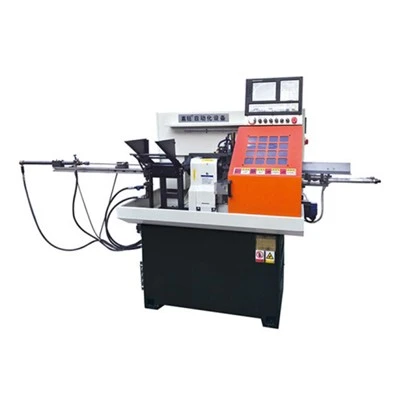
First off, let’s get one thing straight: both are CNC (computer numerical control) tools, right? That means you punch in a design, the code tells the machine what to do, and it moves a spinning cutting tool to make your part. But that’s where the similarities end—trust me, I’ve seen new guys mix these up and end up ruining a $500 piece of aluminum or a week-long custom sign order, so it’s worth paying attention.
Let’s start with the engraving machine, since that’s the one most people recognize from things like custom dog tags or phone cases. Engraving machines are built for precision, fine detail, and shallow cuts—think of them like the calligrapher of the CNC world. Their cutting tools (usually tiny end mills, like 1mm or even smaller) are light duty, and the machine itself is super rigid in the Z-axis (that’s the up-and-down movement, for the non-geeks) because you only need to move the tool a tiny amount to get sharp, clean lines. For example, if a customer brings in a design for a custom brass nameplate, I’ll point them to our entry-level engraver—its Z-axis only needs to drop 0.1mm to etch those tiny letters, and it doesn’t have to push hard. The spindle (the part that spins the tool) on an engraver is usually lower power, too—like 1kW or 2kW max, so it doesn’t waste energy pushing through thick material. And here’s a big tell: engravers almost always have a flat, stable worktable with clamps that hold your part in place tight, but they don’t have heavy-duty table sleds or extra rails for moving big loads. They’re built for small to medium parts: jewelry, personalization, signage with fine text, even engraving on plastic or soft wood like basswood. A lot of hobbyists start with an engraver because they’re cheaper, easier to set up, and you don’t need a whole lot of space for them.
Now, the milling machine—this is the brute workhorse of the two, and where new folks really get confused. Milling machines are built for material removal, deep cuts, and heavy-duty work. Let’s say a customer needs a custom aluminum bracket for a drone, or a wooden furniture component that’s 2 inches thick—you can’t do that with an engraver. Milling machines have way more power in their spindles, usually 3kW or higher, and their Z-axis is built to handle much deeper cuts (we’re talking centimeters, not millimeters here). The machine itself is way sturdier all around—thicker frames, heavier rails, bigger motors that can push the tool through dense material like metal, hard wood, even plastic composites. I had a customer last month who runs a custom metal fabrication shop, he needed 10 identical steel mounts for a solar project—he tried using an engraver first, burned out the spindle in 5 minutes because it couldn’t handle pushing through ½-inch steel. Switched to a mill, got all 10 done in 2 hours, no issues. Another key difference: mills often have a larger work envelope, meaning they can handle way bigger parts—think kayak hull molds, large sign bases, even custom truck parts. They also use a wider range of tools, from large face mills for flattening big surfaces to small end mills for fine work, though that’s not their primary job.
Wait, but hold on—don’t think it’s as black and white as “engraver for small, mill for big.” I’ve seen customers try to use mills for engraving, and it works, but it’s overkill. A mill’s heavier structure can actually cause tiny vibrations when you’re trying to cut shallow, fine lines—you end up with blurry text or uneven etches. And engravers can’t do deep cuts; if you try to push that tiny engraving spindle through hardwood, it’ll skid, burn the wood, or snap the tool. I had a guy bring in a custom wedding ring design once, he tried using our engraver to cut a 2mm deep groove for inlay, and it only went 0.5mm before the tool bent. We switched to a small mill with a low-power spindle for fine work, and it came out perfect.
Another big thing: material compatibility. Engravers are limited to soft or thin materials, mostly. That’s why you see them on acrylic, brass, aluminum sheets up to 3mm, soft wood, leather, even glass for sandblasting engraving. Mills, on the other hand, can handle almost anything—hard steel, titanium, thick hardwood, carbon fiber, even stone. I sold a mill last year to a guy who makes custom knife blades, and he uses it to grind and shape the steel before he hand finishes the edge. That’s not something an engraver can do—its spindle doesn’t have the torque to cut through hardened steel.
Let’s talk about how they move, too. Most engravers are 2.5-axis machines, meaning they move along X, Y, and a fixed Z (or a Z that only moves up and down at a set rate). That’s perfect for flat parts, which is 90% of what engravers do. Mills are often 3-axis, with some even going up to 5-axis for super complex parts, but even basic mills have more flexible Z movement that can adjust depth on the fly for 3D work. For example, if you want a 3D sign with raised letters and recessed backgrounds, a mill can handle that easily—its rigid frame can keep the tool stable as it cuts different depths. An engraver can do simple 3D work, but it’s limited to very low-height reliefs, like 1mm max, because the Z-axis can’t handle the pressure of deeper 3D cuts without warping.
I should also mention cost, because that’s a huge factor for most small businesses and hobbyists. Entry-level engravers start at around $1,000 to $3,000, which is accessible for someone just starting out. Entry-level mills are way more, like $5,000 to $15,000, depending on the size and power. That’s not just because they’re bigger—they have heavier components, more powerful motors, and better rigidity to handle heavy loads. I tell customers all the time: don’t skimp and buy an engraver if you might need to do mill work down the line, because you’ll just have to upgrade later.
Wait, but there’s a middle ground, right? We sell combo machines that do both engraving and milling, and they’re super popular for small shops that do a little bit of everything. They’re not as powerful as a dedicated mill or as precise as a dedicated engraver, but they’re a great middle step. I had a customer who runs a small custom gift shop— he makes engraved dog tags, wooden cutting boards, and occasional small metal parts— a combo machine works perfect for him, he doesn’t need to buy two separate machines. But if you’re mostly doing heavy metal work or large deep cuts, a combo will let down.
Let me also clear up a common myth: some people call all of these “CNC routers,” but that’s not accurate. Routers are usually for woodworking, larger, and have even more power than mills, but they’re a separate category. Engravers and mills are both CNC, but routers are for bigger, lighter cuts on wood and similar materials. I’ve had customers mix up routers with mills, so just to keep things straight: if you’re cutting metal or thick, dense material, it’s a mill, not a router.
Over the years, I’ve had way too many “oops” moments that taught me these differences. Like the time a customer thought his engraver could cut a 1-inch thick oak sign, and after 45 minutes of grinding, he had a burnt, splintered mess and a broken tool. Or the time a jewelry maker used a mill to engrave tiny details on a silver ring, and the vibrations made the lines blurry, so he had to re-do 20 rings. Those moments are why I take the time to walk customers through what they actually need, not just sell them the most expensive machine.
So to wrap this up, let’s keep it simple, no fancy terms:
- Engraving machines are for fine detail, shallow cuts, small parts, soft materials, and budget-friendly needs. Think: personalization, small signage, jewelry.
- Milling machines are for heavy work, deep cuts, large parts, dense materials, and high torque. Think: custom metal parts, thick wood components, industrial fabrication.
If you’re still not sure which one you need, or if you’re ready to upgrade your shop, don’t overthink it. I’ve got a team of guys who can sit down with you, ask about the jobs you do (or want to do), and point you to the right machine—whether it’s an engraver, a mill, or that combo machine I mentioned. No pushy sales stuff, no hidden fees, just real advice from people who use these machines every day.

If you have questions, or you’re ready to chat about what would work best for your business or hobby, reach out. We’re here to help, no matter how big or small your project is.
Vertical Machining Center References
CNC Basics: Understanding Milling vs. Engraving, Modern Machine Shop
CNC Engraving vs. Milling: Key Differences, Manufacturing Tomorrow
Guide to CNC Machine Selection, SME (Society of Manufacturing Engineers)
Taizhou Qiyang Trading Co., Ltd.
As one of the most professional engraving and milling machine manufacturers and suppliers in China, we’re featured by quality products and good price. Please rest assured to buy bulk engraving and milling machine for sale here and get quotation from our factory. Customized orders are welcome.
Address: Zhenhai Village, Binhai Town, Wenling City, Taizhou City, Zhejiang Province
E-mail: qycncmachine@outlook.com
WebSite: https://www.qycncmachine.com/
