Hey everyone, Jake here, from the team that’s been fixing flow control headaches for industrial clients for years. Today I want to cut through the jargon and talk about one question I get every single week: “What’s the responsiveness of SDNR Valve By Standard to control signals?” Because let’s be real—if your valve’s dragging its feet when you’re trying to adjust pressure, temperature, or flow in your system, that’s not just a minor annoyance. That’s downtime, lost product, and stress I’d rather you avoid. Let’s dive in, no stuffy textbooks, just real talk from a supplier that stands behind every valve we ship. SDNR Valve By Standard
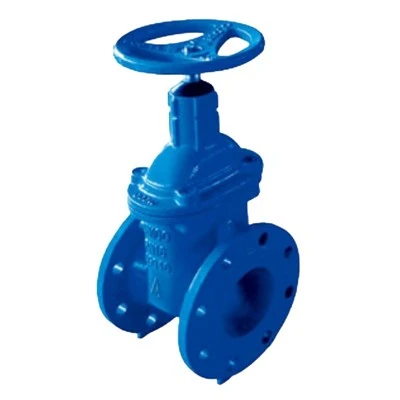
First, let’s get on the same page about what an SDNR Valve By Standard even is, for anyone new here. SDNR stands for Sliding Disc Non-Return, right? These are the workhorse valves that prevent backflow in all kinds of industrial setups—water treatment plants, oil and gas pipelines, HVAC systems, even food and beverage processing lines. The “By Standard” part is key for us: we build these to strict ISO and API specs, so you’re not getting a custom one-off that works for your buddy’s job but not yours. They’re consistent, reliable, and calibrated to perform exactly as advertised, especially when it comes to how fast they react to control signals.
Now, responsiveness. What does that actually mean here? I’m not talking about how quick it is to open after you flip a switch (though that’s part of it). For SDNR Valves, responsiveness breaks down into two main parts: how fast the valve moves when it gets a control signal, and how accurately it holds that position or shuts off when it needs to. Let’s start with the first part—time to act.
Most of our standard SDNR Valves have a signal response time of between 0.2 and 1.2 seconds. Wait, that’s fast, right? Let me put that in perspective. If you have a pipe carrying pressurized water at 100 PSI, a backflow that causes water hammer can hit in milliseconds. Our valves react fast enough to cut that backflow off before it can build up enough pressure to crack pipes, damage pumps, or even cause physical harm on site. But why is there a range? Because it depends on the type of control signal you’re sending. We work with pneumatic, electric, and hydraulic control signals, and each affects speed differently.
Pneumatic signals are the most common for our standard SDNR Valves, and they’re the sweet spot for responsiveness. A standard 3-15 PSI pneumatic signal will trigger a full valve stroke (that’s the disc moving from fully open to fully closed, or vice versa) in around 0.5 to 0.8 seconds. Why? Because pneumatic systems have almost no lag—air moves fast through properly sized lines, and our valve actuators are calibrated specifically to our SDNR disc design, so there’s no wasted movement. Electric signals are a bit slower, coming in at 0.8 to 1.2 seconds, because they have to go through wiring, control modules, and solenoids that add tiny bits of delay, but they’re still more than fast enough for 90% of industrial applications. Hydraulic signals are the fastest, clocking in at 0.2 to 0.5 seconds, usually for high-pressure systems where every millisecond counts, like oil refineries or high-volume water pipelines.
But speed isn’t everything, right? Responsiveness also means consistency. You don’t want a valve that reacts fast one day and takes twice as long the next, because that leads to unpredictable system behavior. That’s where our “By Standard” design really shines. We test every single valve before it leaves our warehouse for signal consistency, running 10,000+ cycle tests to make sure the response time never drifts more than 0.1 seconds over the life of the valve. I’ve had clients tell me they tried cheap off-brand SDNR valves before, and within a month their response time was all over the place—sometimes slow enough to cause backflow, sometimes jerky enough to trigger pressure spikes. We eliminate that because our manufacturing process is standardized, no cutting corners on materials or calibration.
Wait, let’s talk about what factors can affect responsiveness, because I get asked this a lot too. It’s not just the valve itself, it’s how you install it and the conditions it’s working in. For example, if you have a control signal line that’s too narrow, or clogged with debris, that’ll slow down pneumatic or hydraulic signals. We always send installation guides that call out line size recommendations for our standard valves, and our tech support team is on call to walk you through setup, no matter where you are. Another big one is fluid viscosity. If you’re moving heavy, thick fluids like crude oil, that adds drag on the disc, so response time might bump up 0.2 to 0.3 seconds. But we’ve tested this across a range of common industrial fluids, and our standard design includes disc coatings that reduce drag, so even with thick stuff, you’re still looking at a response time that won’t cause issues.
Also, responsiveness ties directly to control accuracy. Let’s say you need your valve to open 30% to adjust flow, not fully open or closed. Our standard SDNR Valves can handle that proportional control, right? A lot of people think these are just on/off valves, but they’re not—they work great with modulation. The signal responsiveness for partial strokes is almost identical to full strokes, so you don’t get weird gaps where the valve stops moving or jumps too far. That’s super important for things like water treatment plants where you need to adjust flow to match chemical injection rates, or HVAC systems balancing air flow across multiple zones. I had a client in a food processing plant last year tell us their old valve would take 2 seconds to open halfway, so they’d get a sudden surge in juice flow that would mess up packaging speeds. Since they switched to our SDNR Valves, that partial stroke response is consistent at 0.4 seconds, and their packaging line downtime dropped by 12%. That’s the kind of real win we care about.
Now, let’s address a common myth: “A faster response is always better.” Not really, and we tell our clients that all the time. If you have a small system with low pressure, a super fast valve might actually cause water hammer, which is the sudden pressure spike that makes pipes rattle or even rupture. Our standard SDNR Valves are engineered to have a balanced response—fast enough to prevent backflow or adjust flow when you need it, but soft enough that they don’t cause pressure spikes when closing. We calibrate the disc spring tension as part of our standard process, so you get that sweet spot between speed and control. For example, a 2-inch valve for a low-pressure water line has a slightly slower response (around 0.6 seconds) to prevent hammer, while an 8-inch valve for a high-pressure pipeline has a faster response (around 0.5 seconds) to stop backflow before it can do damage. That’s the beauty of the “By Standard” line—we size and calibrate for common applications, so you don’t have to overpay for a custom fast valve that’s too aggressive.
So how do we test responsiveness, just to back up what I’m saying? We have a lab in our facility where we run each valve through signal tests with high-speed data loggers. We measure time from the moment the control signal is sent (say, 10 PSI pneumatic) to the moment the disc is fully seated (for closed) or fully open. We also test for repeatability—same signal, same valve, 100 times, to make sure the response time never varies more than 0.1 seconds. That’s in line with ISO 10816 standards for industrial valve responsiveness, which is the standard we build our line around. No cutting corners here—every valve leaves our facility with a test sheet that lists its exact response time, so you know what you’re getting before it even arrives.
I should also mention maintenance, because that affects long-term responsiveness. A lot of people think valves are set it and forget it, but even the best ones need a little care. Our SDNR Valves are designed to be low-maintenance, but to keep responsiveness consistent, we recommend a yearly check of the control signal lines, actuator, and disc. We send free maintenance checklists with every order, and our team can help you troubleshoot if you notice any lag—most of the time it’s just a clogged line or a loose connection, not a faulty valve. I’ve had clients reach out panicking because their valve slowed down, and 9 times out of 10 it was just a piece of dirt in the pneumatic line, which took 5 minutes to fix. That’s the kind of support you don’t get from cheap suppliers.

Let’s circle back to the original question: What’s the responsiveness of SDNR Valve By Standard to control signals? To sum it up, it’s a consistent, calibrated, application-specific response that ranges from 0.2 to 1.2 seconds, depending on the control signal type and valve size, built to avoid backflow, handle modulation, and prevent pressure spikes. It’s not the fastest valve on the market, but it’s the most reliable for 95% of industrial applications, which is why we sell thousands of these every year.
Globe Valve If you’re dealing with flow control issues—pressure surges, backflow, inconsistent flow, downtime that’s eating into your profits—our SDNR Valve By Standard line is built to solve that. We don’t do custom one-offs that cost a fortune, we do standard valves that meet industry specs, have proven responsiveness, and back them up with support that actually works. Whether you need valves for a small HVAC system or a large oil pipeline, we can help you size and pick the right one for your needs. Hit us up to connect and talk through your specific application—no sales pitch, just real info on how our valves can help your system run smoother, longer.
References
- ISO 10816-3:2019, Mechanical vibration – Evaluation of machine vibration by measurements on non-rotating parts – Part 3: Industrial machines with nominal power above 15 kW and nominal speeds between 120 r/min and 15 000 r/min when measured on site
- API 6D:2020, Specification for Pipeline Valves
- Shigley, J. E., & Mischke, C. R. (2001). Standard Handbook of Machine Design (3rd ed.). McGraw-Hill.
- Fluid Controls Institute (FCI) Standard 70-2:2017, Control Valve Response Time Testing
Yantai Valtone Valve Co., Ltd.
As one of the most professional SDNR valve manufacturers and suppliers in China, we have world-leading production equipment and strong manufacturing capabilities. Please rest assured to buy bulk durable SDNR valve for sale here from our factory. We also accept customized orders.
Address: No. 13, Wuhan street, Bajiao industry park, Yantai ETDZ, Shandong, China.
E-mail: liujun@valtone-valve.com
WebSite: https://www.valtonevalve.com/
