Hey there! I’m a supplier of board edgers, and today I wanna chat about the dimensions of a typical board edger. You know, when it comes to these machines, getting the right dimensions is super important for both the efficiency of the operation and the quality of the final product. Board Edger
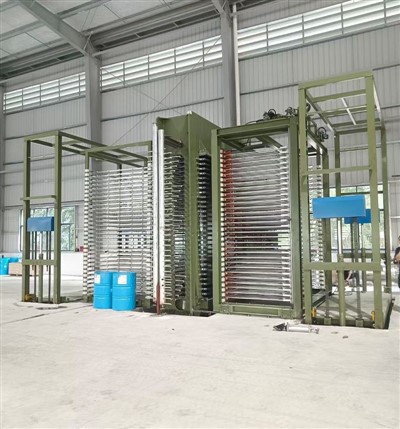
First off, let’s talk about the length of a board edger. A standard board edger usually has a length that can range from around 10 feet to 20 feet. The exact length depends on a few factors. If you’re dealing with smaller boards, a shorter edger might do the trick. Shorter edgers are more compact and can be a great fit for small – scale operations, like a local woodworking shop that churns out custom – made furniture pieces or small wooden crafts. They’re easier to maneuver and don’t take up as much space on the workshop floor.
On the other hand, if you’re running a large – scale lumber mill that processes a ton of long boards every day, you’ll probably need a longer board edger. Longer edgers allow for continuous feeding of long boards without constantly re – positioning them. This means you can increase your production rate significantly. For example, an edger that’s 20 feet long can handle those big, 16 – foot or 20 – foot boards that come straight from the sawmill with ease.
Now, let’s move on to the width. The width of a typical board edger is mainly determined by the maximum width of the boards it can handle. Most board edgers can handle boards that are anywhere from 6 inches to 36 inches wide. If you’re working with narrow boards, say for making picture frames or small moldings, an edger with a smaller width capacity would be sufficient. But if you’re cutting wide boards for things like large tabletops or decking materials, you’ll need an edger that can accommodate those wider dimensions.
Some higher – end board edgers can even handle boards wider than 36 inches, but they’re usually more expensive and require more space and power to operate. So, you really gotta think about what kind of boards you’ll be working with most of the time before deciding on the width of the edger you need.
Next up is the height or the vertical clearance of the board edger. This is crucial because it determines the maximum thickness of the boards that can pass through the machine. A typical board edger can handle boards with a thickness ranging from 1 inch to 6 inches. If you’re involved in making thin plywood sheets or veneers, a lower vertical clearance will be enough. However, if you’re processing thick timbers for construction purposes or heavy – duty furniture, you’ll need an edger with a higher vertical clearance.
The height of the cutting blades also plays a role in the overall vertical capacity of the edger. The blades need to be able to cut through the entire thickness of the board. So, manufacturers design the edgers with adjustable blade heights to handle different thicknesses of boards. This adjustability is a really handy feature as it allows you to work with a variety of board thicknesses without having to buy multiple edgers.
Another important dimension to consider is the distance between the infeed and outfeed tables. This distance affects how smoothly the boards can move through the edger. A good rule of thumb is that the distance should be such that the board can transition from the infeed table to the cutting area and then to the outfeed table without getting caught or misaligned. Usually, a distance of about 2 to 3 feet between the infeed and outfeed tables provides a good balance between stability and ease of operation.
If the distance is too short, the board might not have enough support as it enters and exits the cutting area, which can lead to inaccurate cuts. On the other hand, if the distance is too long, it can be difficult to handle the boards, especially when dealing with heavier or larger ones.
Now, I wanna mention the size of the control panel. The control panel is where you’ll be adjusting all the settings of the board edger, like the blade speed, feed rate, and cutting depth. A typical control panel is usually around 12 inches by 18 inches. This size gives enough space to mount all the necessary buttons, switches, and gauges. It’s not too big that it takes up a lot of extra space on the edger, and it’s not too small that the controls are hard to operate.
Also, the weight of the board edger is an important aspect. A small – scale, portable board edger can weigh as little as 500 pounds. These are great for on – site jobs or small workshops where you might need to move the machine around. Larger, industrial – grade board edgers can weigh anywhere from 2,000 to 5,000 pounds or more. The heavier edgers are usually more stable and can handle continuous, high – volume production, but they require a more solid foundation and proper installation.
When you’re thinking about getting a board edger, all these dimensions matter a whole lot. You need to match the dimensions of the edger with your specific needs. Whether you’re a small – time woodworker or running a big lumber business, getting the right – sized board edger can make a huge difference in your productivity and the quality of your work.

If you’re interested in learning more about our board edgers or getting a quote for a machine that’s just right for your operation, don’t hesitate to reach out. We’ve got a wide range of board edgers with different dimensions to suit your needs. Just got questions? Feel free to ask. We’re here to help you make the best choice for your business.
Single Moving Plate Cold Press References:
- Woodworking Machinery Handbook
- Industry Standards for Board Edgers
Jiashan Changle Machinery Manufacturing Co., Ltd.
We’re well-known as one of the leading board edger manufacturers and suppliers in China, also support customized service. Please feel free to buy advanced board edger for sale here from our factory. Quality products and punctual delivery are available.
Address: Building 12, Zone A, Wanyang Innovation City, No. 23 Yucao South Road, Ganyao Town, Jiashan County, Jiaxing City, Zhejiang Province
E-mail: Changle84615620@163.com
WebSite: https://www.changlejx.com/
