If you’ve ever walked into a commercial building or high-security office and spotted thick, tinted glass in a ground-floor conference room or lobby, you might’ve wondered: Is that new bulletproof glass installed in place of original windows, or is there a way to swap out existing glass without a full renovation? As a supplier of bulletproof glass built to the NIJ Standard—specifically NIJ 0101.06, the most widely used benchmark for ballistic resistance in the U.S.—this question is one I get at least a dozen times a week, from facility managers, small business owners, and even homeowners upgrading security. The short answer is yes, but not without critical considerations tied to how your existing windows are built, what NIJ rating you actually need, and the code hoops your property type has to jump through. Let me break this down like I would for a client who’s just realized their local retail location is on a high-crime block and needs to act fast. Bulletproof Glass for NIJ Standard
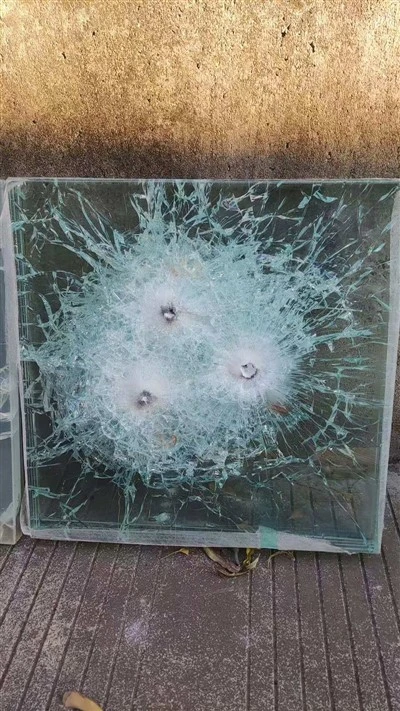
First, a quick recap of what the NIJ Standard actually means, because you can’t answer whether existing windows work without defining what “bulletproof” means here. The National Institute of Justice’s 0101.06 standard categorizes ballistic glazing by threat level, from Level 1 (designed for small, low-caliber handguns like a .22 or .38) all the way up to Level IV (capable of stopping high-powered rifle rounds like an AR-15). A lot of people hear “NIJ compliant” and think it’s one-size-fits-all, but that’s a mistake—choosing the wrong rating for your space is either a waste of money (overkill on a small retail shop) or a risk (using Level 1 for a bank branch, where a .45 or 9mm is a real threat). Now, when we talk about retrofitting existing windows, the biggest hurdle isn’t the glass itself—it’s the window frame. Most existing residential or commercial windows are built for standard annealed glass, which is thin, flexible, and meant to shatter safely under impact, not stop bullets. Bulletproof glass (technically called ballistic glazing) is a laminated composite: layers of polycarbonate (a strong, shatter-resistant plastic) fused between sheets of glass, or sometimes all polycarbonate for lower-level threats. It’s heavy—much heavier than standard glass. For example, a Level 3 NIJ panel (which stops 9mm and .44 Magnum rounds) is about twice as thick as a standard double-pane window and weighs almost three times as much. If your existing frame is made of rotting wood, flimsy aluminum, or vinyl, it won’t support that weight for long. We’ve seen this firsthand with a coffee shop client in downtown Chicago: they tried to DIY a swap on their own, pulling out the old double-pane and slapping a Level 2 NIJ panel in the frame. Within a week, the frame started to bow, and the glass developed a hairline crack because the frame couldn’t distribute the weight evenly. That’s why our team always does a free, on-site assessment first—we check frame material, size, load rating, and even the window’s mounting hardware before we quote anything. Frame load rating is the big one here. Most vinyl and aluminum residential windows have a load capacity of around 50 pounds per square foot. A Level 1 NIJ panel is about 75 pounds per square foot, which is doable, but anything above Level 2 jumps to 100+ pounds per square foot, which will require reinforcing the frame. For commercial aluminum frames, that number is usually around 100 pounds per square foot, but steel frames can handle 200+ pounds without modification. We recently worked with a small bank in Atlanta that had steel frame windows on the ground floor; instead of replacing the frames, we added heavy-duty mounting brackets and shimmed the gaps to distribute the weight, cutting their retrofit cost by 40% compared to full frame replacement. That’s the kind of detail that makes retrofitting possible without a total renovation, but you can’t skip it.
Next, we have to talk about code compliance, which is non-negotiable for commercial properties and even most residential builds in high-crime areas. The International Building Code (IBC) and local fire marshal rules have specific requirements for window retrofits, especially when the glass is a safety component. For example, ballistic glazing that replaces existing windows has to meet impact resistance standards for wind and extreme weather, too—not just bullet resistance. A lot of lower-cost, off-brand bulletproof glass suppliers skip this, selling panels that only meet NIJ ballistic ratings but shatter in a strong wind. We test all our NIJ-rated ballistic glazing for IBC impact resistance as part of the same certification, which means our retrofits don’t require extra inspections. But if you use a cheaper product that doesn’t have that, your local code official might force you to rip out the new glass and start over, which is a costly mistake. Another code quirk: egress. If the window is meant to be a secondary exit (like in a bedroom or small office), the retrofitted ballistic glass has to be operable easily, and the frame can’t be so heavy that someone can’t open it in an emergency. We’ve designed special hinge and lock systems for egress windows that keep the NIJ-rated glass secure but still open in under 5 seconds, which satisfies fire code requirements. One common misconception we hear: ballistic glass is unbreakable. That’s not true—even NIJ-rated glass has a maximum number of rounds it can stop. For example, a Level 3 panel is tested to stop five 9mm rounds and one .44 Magnum round at a specific distance; shoot more, or a round that’s off-target, and it will fail. That’s another reason retrofitting can be tricky: if your existing window has small panes, you might have to use smaller ballistic glass panels that add more seams, which are weaker points. Larger, seamless panels are more resistant to multiple impacts, but they’re also heavier, so frame load becomes even more important.
Let’s talk about process, because what people think is a “swap” is rarely that simple. If you’re retrofitting existing windows with NIJ Standard bulletproof glass, here’s what the process looks like for our clients, and why it takes 1-2 weeks on average (faster than full window replacement, surprisingly). First, the on-site assessment: we measure each window, test frame load, check for rust or rotting that might compromise the frame, and confirm what NIJ rating is needed. We also talk about aesthetics—some clients want the glass to be tinted to match existing windows, others want it clear to not ruin their storefront look, and we can match most finishes. Next, we fabricate the custom panels: since every window is different, we don’t sell one-size-fits-all bulletproof glass. We cut the laminated glass to exact measurements, add the edge sealing that prevents moisture from getting in (critical for longevity, just like standard windows), and test each panel for ballistics in our independent lab to make sure it meets NIJ 0101.06. Once the panels are ready, our installation team comes in with specialized tools to remove the old glass without damaging the frame. We reinforce the frame if needed—adding steel brackets for aluminum frames, for example—and mount the new ballistic glass with heavy-duty, corrosion-resistant hardware. The final step is a post-install test: we do a visual check for gaps, a function test for operable windows, and we provide a certificate of NIJ compliance that you can keep on file for code inspections. We recently did a retrofit for a dental office in Houston that had 12 ground-floor windows; instead of replacing all the frames, we reinforced 5 of the windows and reused the original frames for the rest, and the entire project took 3 days, with no disruption to the office’s regular hours. That’s the kind of efficiency retrofitting offers that full window replacement can’t match.
But it’s not all smooth sailing. There are situations where retrofitting existing windows isn’t worth it, and that’s something we’re upfront about with every client. If your frame is rotting, bent, or has large gaps that let air and water in, reinforcing it will cost almost as much as replacing it, so it’s better to go with new frames. If your window is larger than 6 feet wide, a single seamless ballistic panel that meets NIJ standards might be too heavy to retrofit, even with steel frames—we usually recommend new custom windows in that case. And if you’re looking for a rating higher than Level III (like Level IV for rifle protection), the glass is so thick and heavy that retrofitting almost always requires new frames, because most existing frames can’t support the weight. We had a client in a high-security warehouse that wanted Level IV NIJ glass on their loading dock windows; their existing steel frames were rated for 150 pounds per square foot, but a Level IV panel is 220 pounds per square foot, so we added heavy steel beam reinforcements to the frame structure, which took 2 extra days but saved them from a full frame tear-out.
Another point that comes up a lot: longevity and maintenance. NIJ-rated ballistic glass for retrofits lasts about 20 years, same as standard insulated glass, but only if it’s installed correctly. If you use cheap hardware or skip sealing the edges, moisture will get in between the layers of polycarbonate and glass, causing delamination, which makes the glass ineffective. We offer a 10-year warranty on all our installations, which covers defects in materials and labor, and we do annual maintenance checks for clients who want to keep their glass in top shape. Unlike standard windows, ballistic glass doesn’t scratch easily (we use a scratch-resistant coating on all our panels), but you should never use abrasive cleaners on it—same as you would for car windshield glass.
Now, let’s address the biggest question clients often ask: Is retrofitting cost-effective? Let’s use a real example from last year. A small convenience store in Detroit had 8 ground-floor windows, each 3 feet by 4 feet. They wanted Level 2 NIJ glass (stops 9mm and .357 Magnum rounds). Full window replacement with new vinyl frames would have cost about $8,500. Retrofitting their existing aluminum frames (which could handle 75 pounds per square foot, perfect for Level 2) cost $4,200—half the price. The only extra was $500 for a few reinforcing brackets on two windows that had minor bowing, so total came to $4,700. That’s a huge difference for a small business operating on thin margins. For larger commercial spaces, like office buildings with 50 windows, the savings add up even more: we’ve had clients save $50,000+ by retrofitting instead of full window replacement, as long as their frames are in good shape.
At the end of the day, the answer to “Can NIJ Standard bulletproof glass be installed in existing windows?” is a qualified yes—but it depends on three key factors: frame condition and load capacity, your required NIJ rating, and local code requirements. As a supplier that’s been doing this for over a decade, we don’t push retrofits on every client if it’s not the right fit. We’d rather tell a client their frames are too damaged to retrofit and advise new custom windows, than have them install something that’s unsafe or doesn’t meet code. We also never sell generic NIJ-compliant glass—every panel we provide is custom-measured for your space, tested in an independent lab, and comes with full documentation so you don’t have to worry about code issues down the line.

If you’re considering upgrading your windows with NIJ Standard bulletproof glass, the first step is to reach out for a free on-site assessment (no obligation, no fine print). We’ll come to your property, check your frames, discuss your security needs, and give you a transparent quote that outlines exactly what’s involved—whether that’s a simple retrofit, frame reinforcement, or full window replacement. We work with all types of properties: small businesses, warehouses, banks, schools, and even residential homes in high-crime areas. Our team has seen every scenario, and we’ll give you honest advice, not a sales pitch, to make sure your space is secure without overspending. Don’t take shortcuts when it comes to security—NIJ Standard bulletproof glass is only as effective as the job it’s installed, and retrofitting is a great option when done right. If you’re ready to take the next step, contact our team today to schedule your assessment.
Bulletproof Glass for En1063 Standard References
- National Institute of Justice. (2019). Ballistic Resistance of Personal Body Armor, NIJ Standard 0101.06. U.S. Department of Justice.
- International Code Council. (2021). International Building Code (IBC) Section 2405: Glazing Materials. ICC.
- Underwriters Laboratories Inc. (2022). Ballistic Glazing Unit Testing, UL 752. UL Solutions.
- American Architectural Manufacturers Association. (2020). Load Resistance for Window and Door Assemblies, AAMA 1503. AAMA.
Shaoxing Transparent Armoring Materials Co., Ltd.
As one of the most professional bulletproof glass for nij standard manufacturers and suppliers in China, we’re featured by quality products and good service. Please rest assured to buy durable bulletproof glass for nij standard made in China here from our factory. We also accept customized orders.
Address: No.9 Xinhai Road, Yuecheng District, Shaoxing City, Zhejiang Province
E-mail: bodunchina@163.com
WebSite: https://www.king-armor.com/
