If you’ve ever been tasked with ordering group uniforms—whether it’s for a weekend soccer team, a small local band, a volunteer fire crew, or even a startup team that wants to look cohesive at their next trade show—you’ve probably hit this exact question: “Can we tweak these uniforms to feel like ours without going overboard?” As someone who’s been running this group uniform supply gig for the better part of a decade, I’m here to tell you the short answer is: yes, you absolutely can. But let’s be real—there are limits. And figuring out where that line is (and why it exists) is way less scary than it sounds, especially when you work with a supplier who gets that “group uniform” doesn’t have to mean “cookie-cutter clone of every other group on the planet.” Group Uniforms
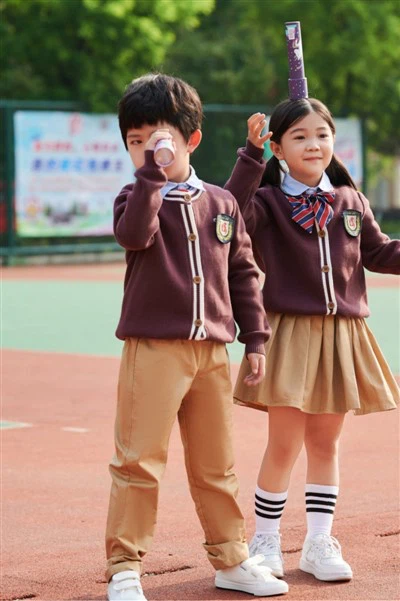
I get it, too. I’ve had customers come to me thinking group uniforms have to be one-size-fits-all, same exact shirt for every single person, no deviations. And then I’ll have another customer—say, a local middle school cross country team—who’s like, “We love the basic navy performance tee you have, but we want our own colors, and maybe a little something on the sleeve for our booster club?” Or a startup that wants their work polos to look polished but not corporate boring, so they can wear them to client meetings and casual team nights. That’s the stuff I live for, honestly. But here’s the thing I’ve learned over the years: personalization isn’t a free-for-all. There are good reasons to stick to certain limits, and when you follow them, you end up with uniforms that work for your group, not just against you.
First, let’s talk about what most people mean when they say “personalize” uniforms. It’s not just slapping a logo on a shirt (though that’s a huge part of it). It’s things like custom colors, adding individual names or numbers, picking different pocket styles, choosing specific fabric that fits your group’s needs—like a soccer team that needs moisture-wicking material vs. a volunteer walk team that wants something soft for long hours. But here’s the first big limit: production efficiency. When you’re ordering group uniforms, you’re almost certainly ordering in bulk, right? No one is ordering 12 uniforms for their team one at a time, that’s way too expensive. Bulk orders are what make group uniforms affordable. So if you start asking for 10 different fabric weights, 15 random colors that aren’t part of our standard color library, and individual custom sizes for every single person that don’t align with our standard sizing charts, that’s where things get tricky.
Wait, hold on—let me give a real example. A few years back, I had a customer who was a regional 4-H club. They wanted custom uniforms for their summer fair booth, which made total sense. They loved our basic khaki uniform pants, but they wanted every single pair to be slightly different: some with a slash pocket, some with a buttoned pocket, some in a lighter khaki, some a darker tan, and a few pairs in a pale green that wasn’t even in our color options. Plus, the kids were all different ages, so some were wearing a 4T and some a 18/20 youth, but they wanted the waistbands adjusted on every single pair. By the time we ran the numbers, the cost per uniform had doubled, and the delivery time went from 2 weeks to 6. That’s when they realized that the “small personal tweaks” they thought would make their uniforms feel special ended up defeating the purpose of bulk ordering. Now, this isn’t to say 4-H can’t have cool uniforms—we ended up working with them to pick two standard pant styles in three colors, adding their logo and the kids’ names, and that came in under budget and on time. They loved it way more than the mismatched, expensive mess they were asking for at first.
Another big limit is functionality. Group uniforms exist for a reason, right? They’re not just fashion statements. A work uniform for a landscaping crew needs to be durable, have pockets for tools, and not be so tight that they can climb a ladder. A dance team’s costume (which is a type of performance uniform) needs to stretch, move with them, and not tear mid-performance. So when you start personalizing, you can’t mess with the core functionality. Let’s say you’re a high school basketball team, and you want to customize your jerseys. Our standard basketball jerseys have mesh panels under the arms to keep players cool, reinforced stitching at the shoulders where they grab each other, and a slightly longer cut so the jersey doesn’t ride up when they’re running. If you come to us and ask to cut 3 inches off the length of every jersey so they look “more modern,” that’s a problem. Those jerseys would ride up as soon as the first player drives to the hoop, and they’d be way more likely to tear. That’s a limit we can’t budge on—and honestly, it’s for your group’s benefit, not ours.
Then there’s branding and consistency. If you’re a corporate team, a sports league, or a volunteer organization, your uniforms are a walking representation of who you are. If you have 20 different shirt colors, 10 different logo placements, and some people with names and some without, that can look messy. I had a corporate client once—they were a small marketing agency with 15 employees—who wanted their work polos to be so personalized that each one had a different font for their name, and the company logo was placed on the left chest for some and the right for others. When they showed up to a client meeting, the client actually commented on how disjointed they looked. That’s when they realized that a little consistency goes a long way. So we worked with them to pick a single logo placement (left chest, where people are used to seeing it), a single font for names, and a consistent color palette, and they loved the result. It was personalized, but it still looked like a team, not a random group of people wearing their own thing.
Now, don’t get me wrong—there’s plenty of room to personalize within reasonable limits, and that’s where the fun stuff happens. Let’s break down what’s usually possible, and what’s not, so you don’t waste time asking for things that can’t be done, or that would cost you more money.
First, custom colors: most reputable uniform suppliers have a standard color library of 20-50 common colors that work for bulk production. That’s way more than enough for almost any group—navy, black, white, red, royal blue, forest green, gray, even fun ones like burnt orange or lavender. If you want a color that’s close to one of these, we can usually match it for a small fee, but if it’s a super weird, custom Pantone color that only matches a single event’s flyer, that’s going to add a ton of cost and lead time. Unless it’s a really big group, that’s probably not worth it.
Next, names and numbers: this is probably the most common personalization people want, and it’s almost always easy to do, as long as you stick to standard fonts and sizes. We have a few dozen fonts to choose from—nothing too crazy, nothing that’s impossible to read from the stands or across a room—so you can pick one that fits your group’s vibe. For sports teams, numbers are standard, and for corporate or volunteer groups, names are a great touch. Just make sure you give us the names at one time, so we can print them all at once, which keeps the cost low. Where people get tripped up here is when they want a different font for every single name, or different sizes for names on small vs. large uniforms. That’s doable, but it adds a little cost, so if you’re on a tight budget, sticking to one font and size is a good call.
Fabric and style tweaks: most suppliers offer a range of fabric options for different needs. If you need moisture-wicking for sports, cotton for casual teams, or heavy-duty fabric for workwear, that’s easy to switch between, and you can even mix styles for different roles in your group. For example, a volunteer fire crew might want the same basic navy pants, but the EMTs could have reinforced knees and the crew chiefs could have an extra pocket for their radio. That’s totally reasonable, no extra hassle. But if you want to change the fabric entirely for half your order, that’s going to add cost, since we have to set up new production runs.
Logo placement: this is another area where you have flexibility, but within reason. Standard placements are left chest, right chest, center chest, or even on the sleeve or back. Moving a logo from left to right is no big deal, but if you want multiple logos in weird, custom places (like a tiny logo on the pocket, a big one on the hem, a second one on the collar), that can get complicated. We usually recommend sticking to 1-2 logo placements to keep the order simple and affordable, and it still looks great.
Now, let’s talk about the lines we don’t cross—why some personalization just isn’t worth it, even if you’re willing to pay. First, anything that undermines the core purpose of the uniform. If you’re ordering work boots for a construction crew, asking for them to be 2 inches shorter than the standard safety boot because you don’t like the look is a hard no. That boot needs to cover the ankle for safety, and we can’t alter that. Same with a band’s performance uniforms—changing the length of a coat so it’s too short to cover their instrument belts is a no-go. Second, anything that slows down production or makes the order way more expensive than it needs to be for a small personal touch. Like the 4-H club example I mentioned earlier—small tweaks that add up to big costs are usually not worth it. And third, anything that looks messy or unprofessional, even if it’s technically possible. A group with uniforms that all look like they were altered in someone’s garage doesn’t feel like a team, it feels like a random collection of stuff.
Wait, but let me tell you a success story that shows how personalization should work, to balance those limits. A few months back, I worked with a local youth hockey team—18 boys, ages 12-14. They loved our basic black practice jerseys, but they wanted to add their team name, their mascot (a bear), and each player’s last name and number. Easy, right? They also wanted their goalie’s jersey to be a different color from the rest of the team, so they picked bright red instead of black. That’s totally within limits—different color for one role is fine, we don’t have to set up a whole new production run. They also asked to have the team logo on the sleeve, instead of the chest, which was a simple placement change. The end result? They had uniforms that looked like their team, not every other hockey team in the area. The cost was only 15% more than the standard jersey order, and delivery was on time. The parents told me later that the boys loved showing up to practice and feeling like their uniforms were unique, not just generic. That’s the sweet spot—personalization that feels special, but still works for the group, the budget, and the purpose of the uniform.
So, to circle back to the original question: Can you personalize group uniforms within certain limits? 100% yes. The key is knowing what those limits are, working with a supplier who will be honest with you about what’s possible (and what’s not), and not falling into the trap of thinking “more personalization = better.” A uniform that works for your group, looks cohesive, fits your budget, and gets you what you need is way better than a pile of one-off, overpriced pieces that no one actually wants to wear.

If you’re currently looking at ordering group uniforms for your team, club, or crew, and you’re wondering how to make them feel like yours without breaking the bank or waiting forever, don’t overcomplicate it. Reach out, tell me what your group needs, what you love about our base uniforms, and what little tweaks would make them perfect for you. We’ll walk through the options, point out what works, what’s easy, and what to skip, so you end up with uniforms you’re proud to wear—no hoops to jump through, no hidden costs, just a process that makes sense.
Outdoor Functional Wear For more information on how custom uniform personalization works, including common options, cost breakdowns, and examples of groups we’ve worked with, you can check out our full guide. If you’re ready to chat about your upcoming order and get a customized quote, connect with our team to discuss your specific needs.
References
- International Safety Equipment Association. (2022). Best Practices for Custom Uniform Design in Group Settings. Retrieved from industry safety and supply chain guidelines
- National Association of Schools and College Unions. (2021). Budget-Friendly Personalization Options for Student Group Uniforms. Retrieved from educational group supply standards
- Apparel Industry Magazine. (2023). Balancing Bulk Production Efficiency and Customization for Group Orders. Retrieved from small business apparel supply reports
- Occupational Safety and Health Administration. (2020). Functional Uniform Requirements for Work and Team Performance. Retrieved from workplace safety apparel standards
- American Youth Sports Coalition. (2022). Uniform Personalization Guidelines for Youth Athletic Teams. Retrieved from youth sports supply and uniform best practices
Anhui Lida Garment Co., Ltd
We are one of the most experienced group uniforms manufacturers and suppliers in China, specialized in providing high quality customized service to global clients. Please feel free to wholesale bulk high-end group uniforms from our factory. Also, free sample is available.
Address: Intersection of Gulou North Street and Wei-3 Road, Chengguan Town, Shucheng County, Lu’an City, Anhui Province
E-mail: leaderclothing2026@163.com
WebSite: https://www.leader-clothing.com/
