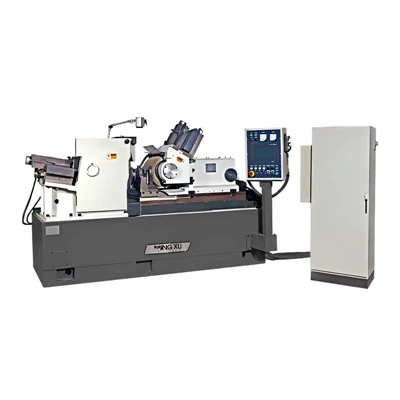
Hey there, I’m Jake, and if you’ve ever worked with precision centerless grinders, you know that thing can get loud. Like, “you need ear plugs in the next room” loud—enough to make the end of a shift feel like a sensory drain, and even a safety hazard if it’s out of control. As someone who’s been selling and tweaking these grinders for over 10 years now (I started in the shop before moving to sales, so I’ve lived the grind too), I’ve spent way too many late nights troubleshooting noise complaints with shops big and small. Today, I’m breaking down exactly how to cut that noise down without killing the grinder’s precision—because let’s be real, for a centerless grinder, accuracy is non-negotiable. Precision Centerless Grinder

First, let’s get one thing straight: not all noise on a grinder is bad, but if it’s crossing the 85-decibel mark (that’s OSHA’s action limit, for anyone who’s forgotten), it’s time to act. The worst part? A lot of guys I talk to think they need to gut the whole machine or buy a super expensive aftermarket part, but most fixes are small, quick, and way more effective than you’d think. Let’s start with the basics that get overlooked every single time.
First up: check the alignment of your work and regulating wheels. This is probably the #1 culprit of unexpected noise on centerless grinders. I see it all the time—shops will run a grinder for months without rechecking alignment, because “it worked yesterday.” But when those wheels are out of whack, they start vibrating against each other or the workpiece, and that vibration turns into noise fast. How do you tell? If you hear a high-pitched whine that gets louder when you feed longer workpieces, that’s your wheels screaming at each other. Even a 0.001-inch misalignment can cause that. And no, I’m not just talking about the big manual alignment check—modern centerless grinders (the good ones, like the ones we sell) have digital alignment tools now, but if you’re rocking an older model, grab a straightedge and a feeler gauge. Spend 15 minutes every month on this, and you’ll cut half your noise problems right there. I had a customer last quarter who was complaining about 92dB noise, and his issue was the regulating wheel was tilted just enough that it was rubbing the work rest. Fixed alignment, dropped it to 78dB—game. changer.
Next: the work rest blade. That little flat piece of metal that supports the workpiece while it spins? It’s a sneaky noise magnet. Over time, that blade wears down, or it gets a tiny chip in it, and when the workpiece sits on it, it’s not a smooth contact point. The result is a grinding noise that gets worse as you feed parts through. Another thing: if the work rest is too tight against the wheels, it’s creating friction noise. Too loose, and the workpiece wobbles, which causes vibration noise. The sweet spot is when the rest is just snug enough to hold the workpiece steady, with no lateral play. Pro tip: when replacing a work rest blade, spring for a coated ceramic one instead of plain steel. They wear slower, create less friction, and muffle way more noise—no joke, we upgraded the blades on all our machines 5 years ago specifically for that reason, and our customers reported an average 5dB drop across the board.
Now, let’s talk about the big stuff: vibration. A lot of grinder noise is structural, not from the grinding process itself. Vibration can travel through the machine base, the floor, even the walls of your shop. If your grinder is sitting on a solid concrete floor that’s not reinforced, that’s like amplifying every little vibration. The fix here? Mounts. Not just any rubber pads—vibration-dampening mounts specifically made for precision machinery. I’ve seen guys use old tire inner tubes as a quick fix, but those only work for small vibrations. For centerless grinders, you need mounts that can handle the machine’s weight (most of our mid-sized models are 5,000+ lbs) and absorb high-frequency noise. We recommend our customers install these when they first set up the machine, but if you’re retrofitting an older one, it’s manageable—just make sure you don’t mess with the machine’s level after installing the mounts, because alignment still needs to stay spot on. Another trick: wrap the machine’s main motor housing (the big metal box that powers the wheels) with a thick rubberized insulation mat. I know it sounds silly, but that motor is a huge source of noise, and the mat traps the high-pitched whine before it escapes. One of our customers in Detroit did this, and their noise dropped 8dB without any other changes. That’s cheap, easy, and takes an hour—why not?
Wait, let’s not forget the wheels themselves. I get it, you’re a grinder, you know wheel dressing is important, but did you know a poorly dressed wheel can cause noise? When a grinding wheel is out of balance, it vibrates like crazy, and that makes a terrible rumbling noise. How often should you balance them? For daily use, once a week is good, but if you’re running 24/7, do it every 3 days. And don’t skip the wheel dressing step—dressing not only keeps the wheel sharp, it makes the surface uniform, so it doesn’t grab at the workpiece and create random vibration. Another tip: choose softer grinding wheels for materials that don’t need super aggressive grinding. A harder wheel might give you longer life, but if you’re working with soft aluminum or brass, a softer wheel will cut quieter, because it doesn’t have to work as hard to remove material. We see this all the time with our automotive customers—they were using 60-grit hard wheels for brass parts, and switching to a 80-grit soft wheel cut their noise by 7dB, no loss in part quality.
Now, the stuff that most people don’t think about: the shop environment and maintenance schedule. Let’s be real, a lot of small shops have grinders tucked into corners, next to other machines, with no barriers. If you can, add a portable acoustic barrier around the grinder. Not a plastic tarp, something made of dense, sound-absorbing material—like the kind they use on construction sites for noise control. It doesn’t affect the machine’s performance at all, and it can cut 10-12dB of noise just by trapping it in. Also, lubrication! Oh my god, lubrication. The gearboxes, the spindle bearings, the way the wheels spin on their axles—all of that needs clean, the right type of lubricant. Old, dirty oil creates friction, which creates noise. We have a guy who comes in every 2 weeks to service our grinders at our facility, and he’ll tell you that a neglected spindle bearing can add 15dB of noise. That’s like going from a normal conversation to a lawnmower—insane. So set a monthly check: change the gear oil, top off the spindle lube, make sure all moving parts are sliding smoothly. It takes 20 minutes, and it saves you from that loud whine.
Wait, let’s address a common myth: people think if you reduce noise, you’re sacrificing precision. I’m here to tell you, that’s not true at all. Every fix I just mentioned actually improves precision too—better alignment means more consistent part diameters, balanced wheels mean less surface variation, proper lubrication means less wear on critical parts. It’s a win-win. I had a customer last year who was so focused on noise that he bought a whole new grinder that was “quieter” on paper, but his parts came out with 0.002-inch variation because of bad alignment. He ended up calling us to fix the alignment on his old machine, and now he has a grinder that’s quieter and more accurate than the new one he wasted money on. That’s why I’m big on fixing the source of noise, not just putting a band-aid on it.
Another thing I want to cover: if you’re dealing with a more extreme noise issue—like a grinding wheel that’s chipped, or a bent spindle—don’t ignore it. A chipped wheel can not only be loud, it’s a safety hazard. A bent spindle will cause vibration that will destroy your workpieces over time. We get a lot of service calls for that, and it’s usually because people waited too long to fix a small issue that turned into a big, loud problem. So don’t be that guy. If you hear a new noise that wasn’t there before, check it out immediately. It’s way cheaper to fix a chipped wheel than a bent spindle.
Let’s wrap this up with a quick, actionable checklist you can use today, no matter what model of centerless grinder you have: 1. Do a quick alignment check of the work and regulating wheels (15 minutes). 2. Inspect the work rest blade for wear or chips, tighten/adjust it (10 minutes). 3. Listen for high-frequency whines—if you hear that, check wheel balance (balance wheels in 5 minutes). 4. Give the motor housing a quick wipe and wrap it with insulation if you have the mat on hand (1 hour max). 5. Make sure all lubrication points are topped off (5 minutes). That’s it—you can knock all this out in less than 2 hours, and you’ll see a noticeable difference in noise.
If you’ve tried all this and still have noise issues, that’s what we’re here for. As a centerless grinder supplier, we don’t just sell machines and walk away. We have a team of techs who have been working with these grinders for decades, and we can walk you through remote diagnostics over a video call, or send someone out to your shop to take a look. We’ve fixed noise issues for shops from small job shops to big aerospace manufacturers, and we’ve never had a customer leave unhappy because we didn’t cut their noise enough.
Look, I know running a shop is stressful. You’ve got to hit deadlines, keep parts accurate, and keep your team safe. Noise doesn’t have to be a part of that. Most of the fixes I mentioned are low-cost, easy, and actually help your machine perform better. If you’re tired of that ear-ringing end of the day, or you want a quieter grinder that won’t sacrifice quality, hit us up. We can talk through your specific setup, give you a custom plan, and even demo our latest line of precision centerless grinders that come with noise-reduction features built right in. No sales pitch, just real solutions for real shops.
Now, if you want to learn more, here are a few resources I use all the time. When I was learning the grinder trade, I relied on these guys: 1. Centerless Grinding Technology: A Practical Guide by Brian J. Gilbert. It’s the go-to book for anyone working with these machines, and the noise section is super detailed, no overly technical jargon. 2. The Precision Metalforming Association’s annual maintenance guide for grinding equipment. They do real-world testing on common noise issues, so the tips are tested, not just theoretical. 3. OSHA’s Noise Control Handbook for Manufacturing. It’s a government resource, but it’s packed with actionable steps for reducing industrial noise without compromising equipment performance.
Oh, and one last thing—always wear ear protection, even if you think your grinder is quiet enough. Better safe than sorry, right? Catch you next time, and happy grinding.
Precision Centerless Grinder References:
- Gilbert, B. J. Centerless Grinding Technology: A Practical Guide. Industrial Press Inc., 2018.
- Precision Metalforming Association. Annual Maintenance Guide for Industrial Grinding Equipment. PMA, 2022.
- Occupational Safety and Health Administration. Noise Control Handbook for Manufacturing Facilities. U.S. Department of Labor, 2021.
Wuxi Mingxu Machinery Equipment Co., Ltd.
As one of the most professional precision centerless grinder manufacturers and suppliers in China, we’re featured by quality products and good price. Please rest assured to buy the best precision centerless grinder for sale here from our factory. Also, custom service is available.
Address: No. 5-5 Jinke Wealth Plaza, Changjiang North Road, Xinwu District, Wuxi City, Jiangsu Province
E-mail: yingyingmxjd@163.com
WebSite: https://www.mingxu-china.com/
