Hey everyone, if you’ve ever worked in industries like construction, mining, agriculture, or even municipal fleets, you know how game-changing skid-mounted fuel stations can be. We’re a skid-mounted fuel station supplier, and let’s be real—most of our clients don’t ask us just about the specs of the station itself. They ask the big question: how the hell do we move this giant, heavy, super important piece of gear from our yard to our site without turning it into a total disaster? Skid-mounted Fuel Station

I get it. You don’t want your brand-new, fully licensed skid unit getting banged up on the highway, or delayed for weeks because of some tiny detail you missed. Over the last 10+ years of doing this, we’ve helped hundreds of clients transport their stations without a single major hiccup. Today, I’m breaking down the exact, step-by-step process we use—no corporate jargon, no skipable fluff, just real stuff that works.
First off, let’s get one thing straight: skid-mounted fuel stations aren’t just big metal boxes. They have fuel tanks, pumps, dispensers, electronic controls, and all sorts of sensitive parts that can break if you don’t handle them right. So before you even think about hitching up a trailer or calling a transport company, there’s pre-transport prep that you can’t sleep on. This is the stuff that prevents 90% of transport headaches.
First step in pre-transport: audit the station and check local rules. Wait—rules? Yeah, I know, no one likes them, but they’re non-negotiable. Every state, province, and even major highway has different weight limits, size limits, and transport requirements for fuel-related equipment. For example, in parts of the US, if your skid unit is over 80,000 lbs (that’s a typical full-size 10,000-gallon unit), you need oversize load permits. Some areas require a pilot car for loads wider than 8.5 feet. And if your station has hazardous materials (which fuel is, duh), you need to follow DOT rules for transporting Class 3 flammable liquids. Skipping a permit can get you pulled over, fined, and your load stuck on the side of the road for days. Not fun.
Then, you gotta empty and clean the fuel tanks. I’ve seen clients try to skip this and end up with fuel sloshing all over the transport truck, ruining other cargo, or even causing a fire hazard. We always recommend pumping out 95% of the fuel (leave a tiny bit to keep internal seals from drying out) and then flushing the tanks with an inert gas or non-flammable cleaning solution? Wait, no—wait, actually, for skid units, we use regular diesel for small tanks or a specialized cleaning fluid for larger ones, then vent the tanks properly to equalize pressure during transport. Also, you have to make sure all fuel lines, pump ports, and dispenser nozzles are capped and sealed tight. No leaks allowed, period. Even a small drip can turn into a big problem on the road.
Next, disconnect all the delicate components. That’s the pumps, the fuel dispensers, the electronic control panels, the credit card readers, even the hoses. We don’t just leave these things hanging—we remove them, wrap them in foam padding, and put them in a secure, locked case that goes in the cab of the transport truck, not the trailer. I’ve had clients try to leave a dispenser bolted to the skid, only for it to crack when the trailer hit a pothole on the highway. $5k part, ruined, all because of a lazy step. Also, if your skid has any solar panels or external sensors, those need to be taken off too, or covered with heavy-duty plastic to keep road debris from scratching them.
Once pre-transport is done, it’s time to pick the right transport method. This isn’t one-size-fits-all, so let’s break down what works for different sizes of skid units.
For smaller skid units—think 500 to 3,000-gallon models, which are super popular for small fleets or remote construction sites—you can usually use a flatbed trailer. But not just any flatbed. You need a heavy-duty flatbed, rated for at least 120% of your skid unit’s total weight (including any accessories you left on, like a small generator). We always specify that the transport company uses a flatbed with low deck height, because that keeps the center of gravity low—super important for stability on the road. If the center of gravity is too high, the load can tip, especially when turning or going over a bridge.
For medium units, like 3,000 to 10,000-gallon ones, you might need a step-deck trailer. Step-decks let you load heavier, taller loads without exceeding height limits (most overpasses have a 13’6” height limit). That’s a big deal—if your skid unit is 11 feet tall, a regular flatbed might not work without you having to take apart parts on the side of the road. Step-decks also have more secure tie-down points, which we’ll talk about in a sec.
And for the big boys—10,000+ gallon units, used for mining operations or major agricultural hubs—you’re gonna need a specialized heavy-haul transport company. These guys do this every day, they know how to handle oversize loads, they have the permits sorted, and they even bring their own pilot cars if needed. You don’t want to hire a regular generic transport company for a 20,000-pound skid unit. Trust me on that.
Now, the part that most people get wrong: securing the load. You can have the best trailer in the world, but if your skid unit shifts on the road, you’re screwed. Here’s how we do it, and what we tell our clients to demand from their transport team.
First, use the right tie-downs. We recommend heavy-duty ratchet straps, not the flimsy ones you buy at a gas station. The number of straps depends on the weight of your unit: for smaller units, use at least 4 straps, one at each corner. For larger units, use 6 to 8, distributed evenly to keep the load balanced. Also, make sure the straps are rated for more than the total weight of the load. A rule of thumb: each strap should be rated for at least 2,000 lbs, so a 4-strap setup can handle 8,000 lbs—more than enough for most skid units.
But wait, straps aren’t enough. You also need to use edge protectors where the straps touch the skid unit’s frame. The frame is usually made of steel, and a ratchet strap can dig into it, leaving scratches or even bending the frame during transport. Edge protectors are cheap, but they save you thousands in damage repairs.
Another pro tip: block the skid unit’s wheels (if it has them, some smaller units do) with rubber chocks, and wedge them tight between the wheels and the trailer. That keeps the unit from rolling forward or back when the driver slams on brakes. And for larger units, we also recommend using wooden or steel cross-beams to brace the skid against the trailer’s sides, so it can’t shift left or right.
Now, the transport day itself—what to do to make sure everything goes smooth. First, do a pre-departure inspection with the driver. Don’t just sign off and let him go. Walk the entire perimeter of the trailer, check every strap, every edge protector, every chock. Make sure the skid unit is level on the trailer (not tilting to one side). And get a copy of all the permits, the driver’s hazmat certification (if your unit is hauling fuel), and the transport insurance. Wait, insurance is huge. Make sure the transport company has enough cargo insurance to cover the full value of your skid unit. Most good ones have $1M or $2M in coverage, but you should confirm it before they hook up.
Also, let the driver know the details of your site. A lot of delays happen not on the highway, but at the drop-off. Is your site on a dirt road? Can the transport trailer get all the way there, or do you need a smaller truck for the last mile? Is there overhead power lines that the driver needs to avoid? We always tell clients to meet the driver at the site 30 minutes before he’s due, so you can walk the access road together, no surprises.
Speaking of drop-off—don’t let the driver just unhitch and leave. You need to inspect the unit immediately after it arrives. Check for dents, scratches, loose parts, any leaks. Fire up the dispenser if you can, test the pumps, make sure all the electronics work. If there’s damage, note it on the delivery receipt before the driver signs off. If you wait a day, the transport company might deny the claim. We always advise our clients to have one of their maintenance guys there for drop-off, not just a office worker who doesn’t know what to look for.
Wait, I should also mention a few common mistakes we see all the time, because these are the ones that cost clients the most. First, not emptying the fuel tanks enough. Even a gallon of fuel left can slosh, get into control panels, and cause corrosion during transport. Second, using the wrong size trailer. We had a client once use a flatbed that was 2 feet too short for his 8,000-gallon skid unit—so the driver had to drive on the shoulder for 200 miles, which was dangerous and delayed the load by 6 hours. Third, rushing the pre-transport prep. One client tried to do all the prep in 2 hours, missed a loose line, and when the driver hit a bump, the line came off, spilling fuel all over the trailer. That cost him $1,500 in cleanup, plus a week of downtime. Take your time on the prep.
Another thing: if you’re transporting the skid unit over a long distance, more than 500 miles, consider hiring a specialized transport company that does this exclusively. They know the routes, they know the best times to travel (like avoiding rush hour or heavy construction zones), and they can handle any issues that pop up along the way—like a flat tire or a last-minute permit delay. We work with a handful of transport partners that we trust, so if a client needs a referral, we’re happy to pass it along—no strings attached.
Wait, let’s circle back to being a skid-mounted fuel station supplier. This is why we don’t just sell units—we help with the whole process, including transport. Because we know that if your unit doesn’t arrive on time and intact, our product doesn’t matter. That’s why we include a transport consultation with every purchase. We’ll help you figure out the right trailer, the permits needed, the best transport route, and even connect you with our trusted partners if you don’t want to handle it all yourself.
Now, let’s get to the ask—if you’re in the market for a skid-mounted fuel station, or you already have one that needs transporting, don’t mess around with this on your own. We’ve got the expertise, the partners, and the track record to get your unit where it needs to be, safe and on time. Reach out to us to discuss your specific needs—whether you’re a small construction company moving a 2,000-gallon unit or a mining operation moving a 15,000-gallon heavy-haul job. We’ll walk you through every step, no fine print, no hidden fees.
Before I wrap this up, a quick note: even if you follow every single step I laid out here, stuff can happen. Road debris can hit the unit, a strap can come loose for some reason. That’s why inspection is non-negotiable before the driver leaves the drop-off site. Don’t take their word that everything’s fine. Look at it yourself.
At the end of the day, transporting a skid-mounted fuel station is all about attention to detail. It’s not rocket science, but it’s not something you want to cut corners on. If you do it right, your unit will arrive at your site ready to install, no delays, no damage. If you do it wrong, you’re looking at thousands in repairs, weeks of downtime, and a huge headache.
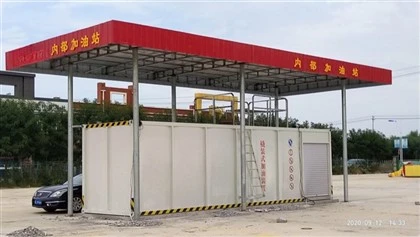
If you need help with your next skid unit transport, or you’re looking for a reliable skid-mounted fuel station supplier to work with, get in touch with us. We’re here to make this process as easy as possible for you.
Explosion-proof Fuel Station References:
- Occupational Safety and Health Administration (OSHA) – Hazardous Materials Transport Guidelines for Flammable Liquids
- Federal Motor Carrier Safety Administration (FMCSA) – Oversize/Overweight Vehicle Transport Regulations
- National Petroleum Equipment Association (NPEA) – Best Practices for Skid-Mounted Fuel Station Handling and Transport
Shandong Jingcai Industry and Trade Co., Ltd.
As one of the most professional skid-mounted fuel station manufacturers and suppliers in China, we also support customized service. With abundant experience, we warmly welcome you to wholesale high quality skid-mounted fuel station in stock here from our factory. Contact us for free sample.
Address: Caojiazhuang Village Industrial Park, Lingcheng Town, Qufu City, Jining City, Shandong Province.
E-mail: shandongjingcai888@gmail.com
WebSite: https://www.sdjingcaicn.com/
