If you’ve ever carefully opened a sterile blister pack for a bandage, a prescription inhaler, or a vial of single-dose medication, there’s a good chance you didn’t notice the material that made that seal so reliable and the contents so safe. As a duplex board supplier with nearly 15 years in the industry, I hear that question all the time: “What makes duplex board the unsung hero of medical packaging?” Most people see it as just thick paper, but anyone who’s worked with medical grade materials knows it’s a precision-engineered product designed to solve very specific, high-stakes problems in healthcare. Today, I want to pull back the curtain on how this material works in the medical space, why it’s become non-negotiable for hospitals and drug manufacturers, and why it’s the first material I recommend when our clients need packaging that balances safety, functionality, and sustainability. Duplex Board

First, let’s cut through the confusion: duplex board isn’t your average cardstock. Standard duplex board is made by fusing two layers of paper pulp together, one bleached (for a smooth, uniform surface that prints clearly) and one unbleached (for strength, rigidity, and minimal fiber contamination). Medical-grade duplex board takes this base structure and adds strict, industry-specific modifications that make it suitable for one of the most regulated spaces on Earth. The biggest adjustment? It’s treated to be sterile, moisture-resistant, and free of any volatile organic compounds (VOCs) that could leach into sensitive medications or harm a patient’s skin. For context, our production team at the mill tests every batch of medical duplex board for endotoxin levels—even tiny amounts of bacteria residue would be a dealbreaker for packaging insulin or disposable surgical tools. That level of control is why regulatory bodies like the FDA in the U.S. and the EU’s MDR (Medical Device Regulation) list duplex board as an approved material for most single-use medical packaging.
Now, let’s talk about where this material actually lives in the medical industry, because it’s not a one-size-fits-all product. I’ve worked with clients ranging from small sterile supply startups to large pharmaceutical giants, and each has unique needs that duplex board is built to meet. The first and most common use case is blister packaging for single-use medical devices and over-the-counter (OTC) medications. If you’ve ever bought a travel-sized hand sanitizer packet, a single dose of allergy pills, or a sterile suture kit, the hard side of that blister is medical duplex board. It’s the perfect pairing here because it rigid enough to hold its shape during shipping (no crushed pills or bent tools) but thin enough to run through high-speed packaging lines. I remember a client a few years back that tried switching to cheaper, single-layer paper for their allergy pill blisters; within three months, they were dealing with 12% more returns because the blisters would tear during transport, exposing pills to humidity. Switching back to our medical-grade duplex board cut that defect rate to less than 0.5% almost overnight.
Another big use is cartons for prescription drugs and diagnostic tests. Think of the cardboard box that holds a month’s worth of prescription blood pressure medication or a home COVID test kit. The outer layer of that box is usually a printed grade of medical duplex board, because it can be printed with detailed instructions, lot numbers, and expiration dates without smudging or peeling—critical for patients who need to read dosing info clearly. Even more importantly, it provides a secondary layer of barrier protection. For temperature-sensitive drugs like insulin pens or some biologic medications, we offer a moisture-resistant coated duplex board that adds an extra buffer against humidity during storage and shipping. I’ve seen this make a huge difference for clients that ship to rural areas with inconsistent storage temperatures; before using our coated duplex board, they were losing 8% of their insulin shipments to moisture damage, and that number dropped to 1% after switching.
Surgical and medical supply packaging is where duplex board really proves its worth, though. For disposable surgical tools, gloves, sterile gauze, and drape kits, the packaging has to do more than just hold the items—it has to keep them sterile until the moment they’re opened. That’s called “barrier protection,” and medical duplex board is uniquely suited for this. Its layered structure creates a tight seal when paired with a plastic film, and it’s designed to let ethylene oxide (EtO) gas sterilize the contents while blocking out bacteria, dust, and moisture after sterilization. I’ve visited a hospital supply warehouse last year where they had a whole pallet of surgical scalpel kits packaged in a cheaper alternative that wasn’t designed for EtO sterilization; after three months, the kits had small tears in the packaging that would have put patients at risk for surgical site infections. Switching to our EtO-compatible duplex board solved that problem, and the hospital now uses it for 90% of their single-use surgical supply packaging.
One thing a lot of people don’t talk about is sustainability, and that’s a big reason duplex board has stuck around in medical packaging. Unlike plastic blisters that can take hundreds of years to decompose, most medical duplex board is 100% recyclable and often made from FSC-certified pulp sourced from responsibly managed forests. And because it’s rigid, it reduces the amount of packaging needed per shipment—less material means lower carbon emissions from shipping. That’s become a huge selling point for our clients, especially as hospitals and drug manufacturers face pressure from patients and regulators to reduce their plastic footprint. Last quarter, a large pharmaceutical company switched 40% of their plastic drug blisters to our recyclable duplex board, cutting their annual plastic waste by over 120 tons.
Of course, there are challenges. Medical packaging has to meet exacting standards, and not all duplex board is created equal. We run 17 quality checks on every batch of medical duplex board we produce, from fiber purity to seal strength, because even a tiny defect can have life-threatening consequences. For example, if a blister pack for an injectable drug seals weakly, it could let in bacteria, leading to a dangerous infection. That’s why we work closely with each client to tailor our duplex board to their specific needs—some clients need ultra-thin board for high-speed packaging lines, others need extra-thick board for heavy surgical tools, and a few need board that meets unique regulatory requirements for pediatric medication packaging. I’ve spent hours on the phone with a startup that was designing a new pediatric EpiPen, helping them test different grades of duplex board to make sure the packaging was easy for parents to open but tamper-proof enough to keep kids safe. That kind of collaboration is what sets us apart, I think—we don’t just sell a product, we work with our clients to solve their unique packaging problems.
If you’re a medical device manufacturer, pharmaceutical brand, or hospital supply manager who’s tired of dealing with packaging that’s unreliable, too expensive, or hard to dispose of, duplex board is worth a closer look. It’s not the flashiest packaging material out there, but it’s one of the most important, because it balances safety, functionality, and sustainability in a space where there’s no room for error. At the end of the day, medical packaging’s only job is to protect what’s inside, and duplex board does that better than most materials on the market today.
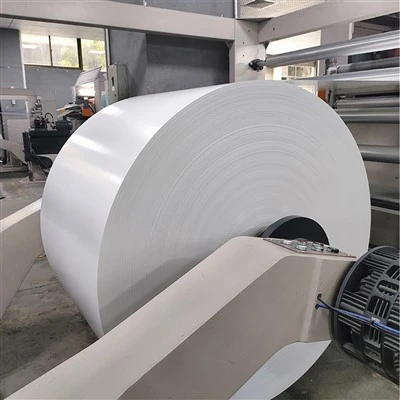
I’m always here to walk through options for your specific project, whether you’re looking for small-batch custom board or large-scale orders for a national healthcare provider. Reach out when you’re ready to talk through your packaging needs, and we can start finding the right duplex board for your medical application.
Copy Paper References
- U.S. Food and Drug Administration (FDA). Guidance for Industry: Packaging and Labeling Requirements for Human Drugs and Biologics. 2021.
- European Commission. Medical Device Regulation (MDR) 2017/745: Annex IX – Requirements for Packaging and Labeling. 2017.
- Duplex Board Specifications for Sterile Medical Packaging. Technical Association of the Pulp and Paper Industry (TAPPI) Standard T809 om-18. 2018.
- World Health Organization (WHO). Guidelines for Sterilization of Health Care Products: Ethylene Oxide Sterilization. 2019.
- Sustainable Packaging Coalition. Medical Packaging Material Guide: Paper-Based Solutions. 2022.
Dongguan Banyan Material Co., Ltd.
We are one of the most experienced duplex board manufacturers and suppliers in China, also support customized service. Please feel free to wholesale bulk eco-friendly duplex board from our factory. Quality products and reasonable price are available.
Address: NO.167, Meijing West Road, Songmushan, Dalang Town, Dongguan City, Guangdong Province, China
E-mail: Sales_chris@yspaper.com
WebSite: https://www.paperyoung.com/
